• Features
  • Videos
  • Podcasts
  • Specials
  • Articles
  • Shorts
Donate
    • English
    • Français
    • Swahili
  • English
  • Español (Spanish)
  • Français (French)
  • Bahasa Indonesia (Indonesian)
  • Brasil (Portuguese)
  • India (English)
  • हिंदी (Hindi)
  • বাংলা (Bengali)
  • Swahili
  • Videos
  • Podcasts
  • Articles
  • Short News
  • Feature Stories
  • The Latest
  • Explore All
  • About
  • Team
  • Contact
  • Donate
  • Subscribe page
  • Submissions
  • Privacy Policy
  • Terms of Use
  • Advertising
  • Wild Madagascar
  • For Kids
  • Mongabay.org
  • Reforestation App
  • Planetary Health Check
  • Conservation Effectiveness
  • Mongabay Data Studio

Latest

Nigerian billionaire Aliko Dangote. Photo courtesy of The Habari Network.

Environmental activists in Kenya concerned over billionaire's planned oil refinery

Amina Chombo 5 Aug 2026

Global hunger levels fall but Africa still lags behind, UN report finds

Charles Mpaka 4 Aug 2026

Kenyans protesting nuclear facility face terrorism investigation

Elodie Toto 4 Aug 2026

Ebola responders persevere in the DRC as Uganda nears end of outbreak

Elodie Toto 3 Aug 2026

Documentary captures impacts of diamond mining along South Africa’s West Coast

Victoria Schneider 3 Aug 2026

Rare living stone plant, found in a tiny area in Namibia, is critically endangered

Shreya Dasgupta 3 Aug 2026
All news

Top stories

Tigers in Rajasthan, India. The country is a stronghold of wild tigers, and the report found that most of the wild tigers smuggled into Cambodia came from India.

Report reveals Cambodia’s appetite for tigers, rhinos and other endangered wildlife

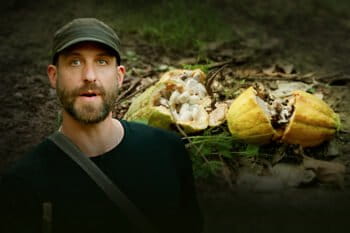
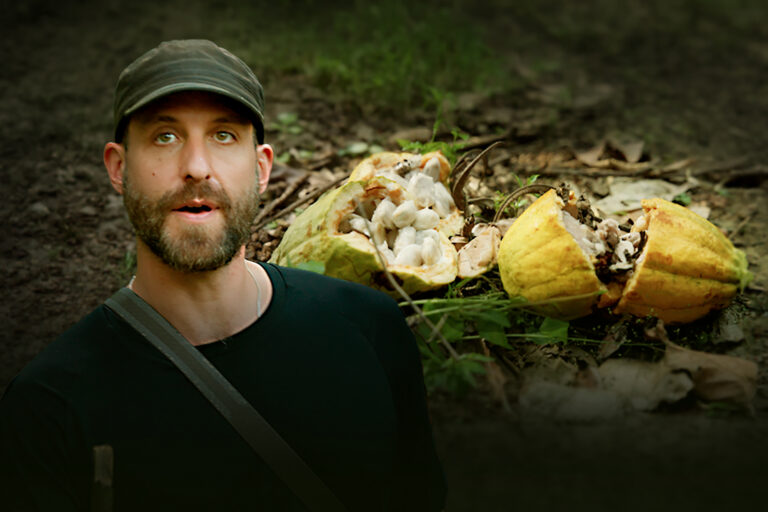
A collage featuring Ashoka Mukpo, a Mongabay reporter, and a cocoa bean

Why are forests vanishing in southeastern Liberia?

Juan Maza, Ashoka Mukpo 18 Jul 2026
Packaging cocoa beans in Grand Gedeh, Liberia. Photo by Ashoka Mukpo for Mongabay.

The vanishing forests on Liberia’s cocoa frontier

Ashoka Mukpo 16 Jul 2026

The women leading a quiet conservation revolution in a Nigerian gorilla sanctuary

Orji Sunday 6 Jul 2026
A leopard in Pendjari NP, in 2022. Camera traps were placed along likely travel routes and positioned to photograph both sides of the leopards to aid with identification. The researchers were able to identify 30 individual leopards from their unique spot patterns. Image courtesy of ZSL-CCI/Panthera/APN-Pendjari National Park.

Endangered West African leopards show signs of recovery, despite odds. 'It's a win'

Ruth Kamnitzer 2 Jul 2026

Subscribe

Stay informed with news and inspiration from nature’s frontline.
Newsletter

We’re a nonprofit

Help us tell impactful stories of biodiversity loss, climate change, and more
Donate

News and Inspiration from Nature's Frontline.

A collage featuring Ashoka Mukpo, a Mongabay reporter, and a cocoa bean
Videos
Nigerian billionaire Aliko Dangote. Photo courtesy of The Habari Network.
Articles
A young cacao tree in Grand Gedeh, Liberia. Photo by Ashoka Mukpo for Mongabay.
Podcasts

Special issues connect the dots between stories

Who controls Indian Ocean tuna?

A whale shark (Rhincodon typus). Image courtesy of Iris Ziegler.

Tuna talks bring wins for Indian Ocean sharks, but more needed, experts say

Malavika Vyawahare 1 May 2025
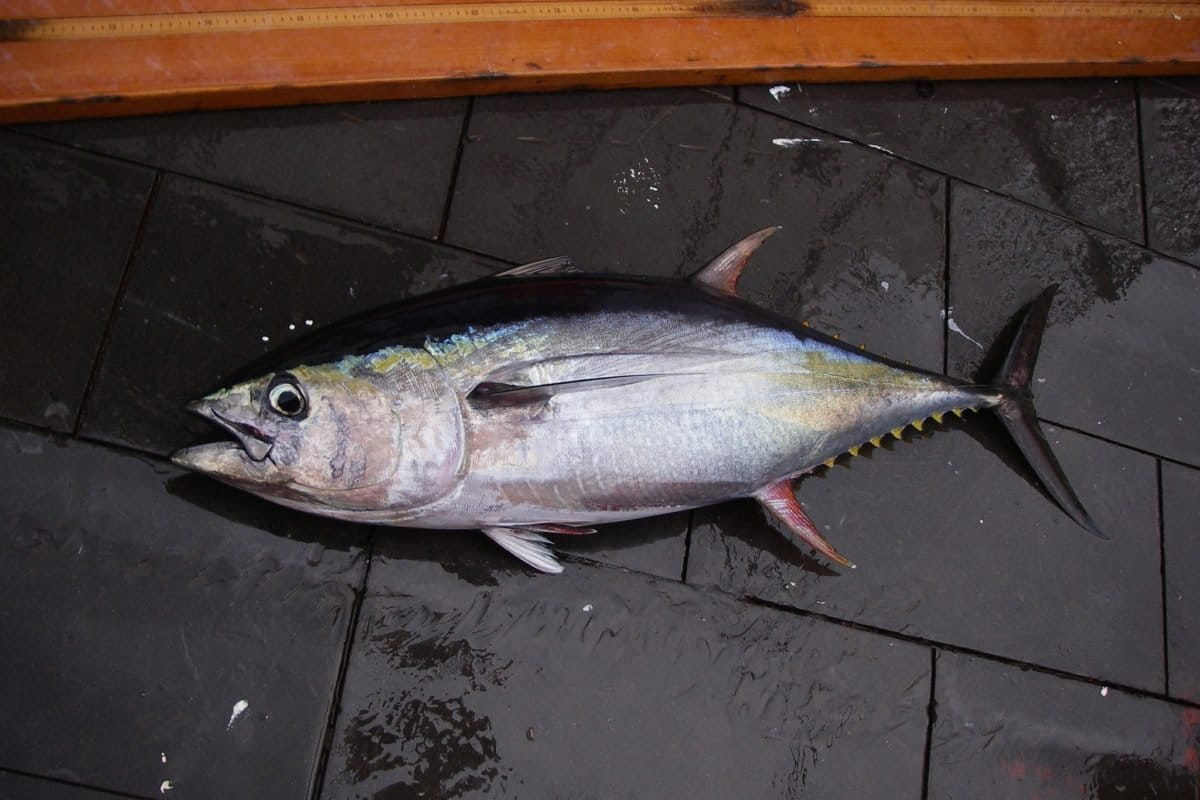
Yellowfin tuna catch laid out on leaves.

As one Indian Ocean tuna stock faces collapse, nations scramble to save others

Malavika Vyawahare 29 May 2023

Critics allege EU’s ‘toxic collusion’ with fishing lobbies is damaging Indian Ocean tuna

Malavika Vyawahare 7 Feb 2023

‘Watered-down’ plan to save Indian Ocean yellowfin tuna disappoints conservationists

Malavika Vyawahare 17 Jun 2021
Who controls Indian Ocean tuna? series

More specials

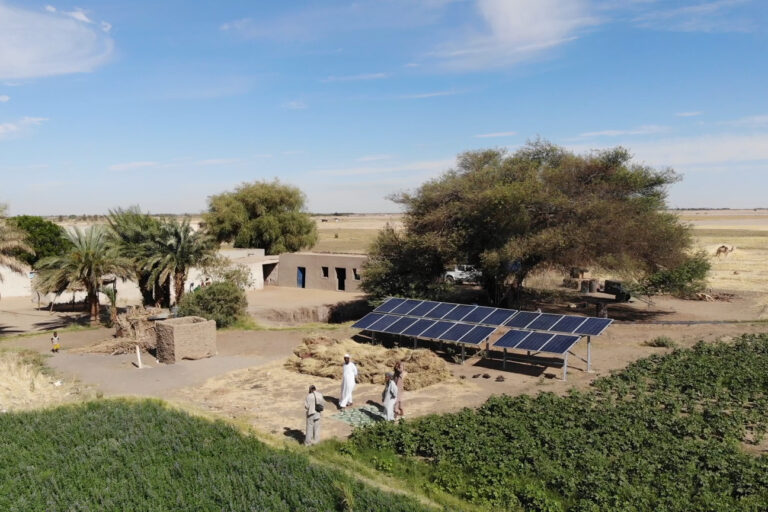
Solar panels in an arid part of Sudan.
9 stories

Negotiating Africa’s Energy Future

5 stories

The Great Insect Crisis

7 stories

Kafue River Transect

Free and open access to credible information

Learn more

Listen to Nature with thought-provoking podcasts

A young cacao tree in Grand Gedeh, Liberia. Photo by Ashoka Mukpo for Mongabay.

Forests in Liberia are falling to cocoa, in half a year the EU could ban imports

Mike DiGirolamo 28 Jul 2026

Watch unique videos that cut through the noise

A collage featuring Ashoka Mukpo, a Mongabay reporter, and a cocoa bean

Why are forests vanishing in southeastern Liberia?

Collage, Jahëna Louisin, Mongabay reporter, and a Vodun ritual

Vodun's sacred role in saving West Africa’s mangroves

Jahëna Louisin 9 May 2026
Rangers at Gashaka Gumti National Park, Nigeria

Defying conflict to track the world’s rarest chimpanzees

Leo Plunkett, Tom Richards, Sandy Watt 13 Apr 2026
Gold mine in the Dimonika Biosphere Reserve, the Republic of the Congo

What Republic of Congo’s gold rush is leaving behind

Berdy Pambou 17 Sep 2025
Woman farming seaweed at Pemba Island, Tanzania

Building a future from seaweed in coastal Tanzania

Lucia Torres 1 May 2025

We’re a nonprofit

Help us tell impactful stories of biodiversity loss, climate change, and more
Donate

In-depth feature stories reveal context and insight

A man fishes in the Niger Delta near the village of Diebu, Nigeria, Saturday, May 18, 2013. Image by Jon Gambrell / AP Photo.
Feature story

Despite oil spills in Nigeria's mangrove forests, Shell continued operations, documents show

Victoria Schneider, David Akana 6 Jun 2026
Lee White managed Gabon’s national parks for 10 years before becoming environment minister. Photo taken from his Facebook page.
Feature story

Carbon cowboys and unpaid pledges: Ex-Gabon environment minister Lee White on conservation in Africa

Elodie Toto 25 May 2026
A boy gathers water in Kalokol, with submerged palm trees behind. Image by Christopher Clark for Mongabay.
Feature story

Rising waters and mounting pressures collide on Kenya’s Lake Turkana

Christopher Clark 19 May 2026
African savanna elephants are endangered, after years of poaching for their ivory, decimated their numbers. Now, their habitats are fast-shrinking due to human activities.
Feature story

Trump called trophy hunting a “horror show,” but permitted 300-plus elephant trophy imports in 2025

Spoorthy Raman 18 May 2026

Quickly stay updated with our news shorts

Kenyans protesting nuclear facility face terrorism investigation

Elodie Toto 4 Aug 2026
Following protests at a public meeting about a proposed nuclear power plant in Kenya, one person was shot and several residents were arrested. The Kenyan government plans to build a 2,000-megawatt nuclear power plant near Bondo, a town in Siaya County near Lake Victoria. Officials, including representatives from the Nuclear Power and Energy Agency (NuPEA), were holding a public consultation meeting in the town on July 24 when the protests started. Dickens Ochieng, a lawyer and community member who attended the meeting, told Mongabay by phone that the landowners invited to the meeting started shouting “Wadagi,” which means “we refuse" in Dholuo language, in reference to the nuclear project. "And then one of the police officers who was guarding the government agencies used his firearm and as a result one person was shot on the leg and the meeting turned chaotic instantly," he said. According to Ochieng, residents of Bondo began throwing stones at police officers, who responded with tear gas. In the days that followed, 17 people were arrested and detained. An official document reviewed by Mongabay shows that the arrested people are now under investigation for assault as well as Kenya's Prevention of Terrorism Act. Ochieng, who has taken on their legal defense, said there “is an intense government crackdown on people who are opposed to the project.” “As a lawyer, I just keep on telling the community that they have to stand firm, because terrorism charges have nowhere to do with the incident that happened,” he said. “They are meant to intimidate and to silence you, not to convict anyone.” So far, 15 of the 17 suspects have been released after community members raised money through crowdfunding to pay their bail, which costs between 15,000-180,000 Kenyan shillings ($116-1,391), Ochieng said. “In the community, most people are fishermen, small-scale traders and they do small businesses,” he said. “According to the statistics, most of them live below $1 per day. The defenders coalition was able to pay the lower bail amounts, but for the others, it's complicated." Mongabay contacted both the Bondo police commander and NuPEA for comment. Neither had responded by the time of publication. In May, communities held demonstrations against the proposed nuclear plant, while a petition calling for the project to be halted has continued to circulate online. The Strategic Environmental Assessment report for Kenya’s nuclear power program published in 2023 noted that the Lake Victoria region should be avoided since it is vulnerable to volcanic disturbances, “which may impair the safety” of a nuclear power plant. Lake Victoria, Africa's largest freshwater lake, is shared by Kenya, Uganda and Tanzania, and millions of people across the three countries depend on it for their livelihoods, food security and drinking water. Banner image: Fishing boats in Luanda Kotieno, in the Bondo area of Siaya County, where the Kenyan government is planning to build a nuclear power plant. Image by Victor Ochieng via Flickr (CC BY-SA 2.0).
Fishing boats in Luanda Kotieno.

Rare living stone plant, found in a tiny area in Namibia, is critically endangered

Shreya Dasgupta 3 Aug 2026
In a small area of Namibia’s Erongo Mountains, a tiny, pebble-like plant grows on a very thin layer of gravel. This succulent, Lithops werneri, is found in just one tiny 4 square-kilometer (1.5 square-mile) area, according to the IUCN, the global wildlife conservation authority. With more than an 80% decline in its population since 1981 and fewer than 200 plants remaining in the wild, the species was listed as critically endangered on the IUCN Red List in February 2026. Sonja Loots, manager of the Threatened Plants Programme at Namibia’s National Botanical Research Institute, told Mongabay by email that the plant “has always had a restricted range”. After it was first scientifically described in the 1950s, the succulent was “heavily harvested for the horticulture market in Europe”, she said. “Since then it was searched for numerous times by several succulent enthusiasts, but additional populations were never discovered.” The plant was even once thought to be extinct, but was found again in the original location in 2012, Soots said. A census in 2012 recorded 659 plants, according to the IUCN, but subsequent surveys found only 118 plants in 2019 and 163 in 2020. Lithops are a group of dwarf succulents, commonly called living stones or pebble plants, found across South Africa, Namibia and Botswana. These plants only grow on certain rocky outcrops and typically have just a single pair of water-storing succulent leaves attached to some roots, Loots said. L. werneri grows in a very thin layer of gravel, approximately 2 centimeters (0.8 inches) thick, on top of a granite sheet, she added. Illegal collection, which historically wiped out populations of Lithops plants, may still be a factor in L. werneri’s decline, Loots said. Now, climate change is a major threat as well. “The plants have a very shallow root system,” Loots said. “Mature plants can only survive a few years without water. The seeds can survive for a long time inside their capsules (which is why they should not be collected) but seedlings need follow up rain showers for several years to survive.” Harsh droughts might also compel animals to look for edible plants they don’t normally feed on, such as L. werneri. “There was evidence of such disturbance by some observers since 2012, when the population experienced a severe drought,” Loots said. “A significant number of plants were found dislodged and therefore died because the roots were exposed, they were eaten or the habitat was disturbed.” Flooding is also a threat to the unstable habitat. With L. werneri found in just one location, any random or extreme disturbance could wipe out the entire species, Loots said, “Any species where a 100% of the population occurs in a single location is important to conserve.” “Plant poaching, although it has exponentially increased in the last 5 years is also being addressed by various collaborators in Namibia,” she said. [caption id="attachment_325170" align="alignnone" width="768"]Lithops werneri © Sonja Loots/National Botanical Research Institute of Namibia. Lithops werneri © Sonja Loots/National Botanical Research Institute of Namibia.[/caption] Banner image of Lithops werneri © Sonja Loots/National Botanical Research Institute of Namibia.
Lithops werneri © Sonja Loots/National Botanical Research Institute of Namibia.

Central African Republic’s Dzanga-Sangha tests the promise of wildlife tourism

Rhett Ayers Butler 31 Jul 2026

Founder's Briefs: An occasional series where Mongabay founder Rhett Ayers Butler shares analysis, perspectives and story summaries.

In the Central African Republic, a country often seen mainly through the lens of instability, a different story is unfolding in its southwest. In March, Mongabay Africa program director David Akana and I spent time in and around Dzanga-Sangha National Park, speaking with researchers, conservationists, community members, and park officials. What we heard was not quite reflected in the usual narrative. Bayanga, the town at the park’s edge, has seen a modest rise in visitors. Dzanga Bai, where forest elephants gather in high densities within the park, and a population of habituated lowland gorillas, remain the main draws. According to local officials, around 800 tourists visited in 2025, a small figure by global standards, but meaningful locally. “There is growth,” said Gervais Pamongui, a deputy director of the Dzanga-Sangha Protected Areas. He attributed this to both the site itself and a degree of stability that has held in the region. Others made similar points, though often with caveats. A tour guide, Léonce Madomi, described the country’s reputation for insecurity as “both true and false,” noting that Bayanga has largely avoided the disruptions seen elsewhere. Lodges report steadier business. Guides and trackers have more consistent work. Some residents point to income that supports school fees or medical care. Yet the gains are uneven and limited in scale. Tourism employs a narrow slice of the population, and basic constraints remain, from poor roads to food shortages. The model is still developing. Revenue-sharing arrangements are in place between communities, the park, and government agencies, with the park and its management partners supporting local services, including health facilities and a mobile clinic, a solar farm to supply the town with power, a human rights center, a community radio station, and other services in the surrounding area. There are plans to upgrade Dzanga Bai's viewing platform. Even so, it is not clear that wildlife tourism alone can support a broader local economy. For now, Dzanga-Sangha stands as a partial answer to the challenges facing conservation in places with limited economic opportunity. It has created visible benefits, but its future will depend on whether those gains extend beyond the park and into the wider local economy. Read the full story by David Akana here. Banner image: Most tourists who travel to the Central African Republic are drawn by the western lowland gorillas (Gorilla gorilla gorilla) in Dzanga-Sangha National Park. Image by Rhett A. Butler/ Mongabay.
Most tourists who travel to the Central African Republic (CAR) are drawn by the western lowland gorillas (Gorilla gorilla gorilla) in Dzanga-Sangha National Park. Image by Rhett A. Butler/ Mongabay.

World Ranger Day: Justice for the protectors of the wild

Shreya Dasgupta 31 Jul 2026
July 31 is World Ranger Day, which celebrates the work rangers do for the natural world and commemorates those killed or injured in the line of duty. Among them was Anton Mzimba, head ranger at Timbavati Private Nature Reserve in South Africa, where he had served for 25 years. On July 26, 2022, Mzimba was shot dead outside his home by two men, allegedly in connection with his rhino protection work. Four years later, the case remains open, with no arrests made. “If a ranger of Anton's standing and integrity can be killed for doing work that serves the greater good, and there are still no consequences for the people who perpetrated this crime, what confidence does that inspire in the men and women holding the line on the front lines of conservation?” John Jurko II, lead director of a documentary about Mzimba titled Rhino Man, told Mongabay by email. In 2024, Jurko II launched a “Justice for Anton Mzimba” campaign to help speed up the investigation. Mzimba’s killing is being investigated by the Hawks, a specialized unit within the South African Police Service. Hawks typically investigate organized crime and police murders, but took over Mzimba’s case because of its links to rhino poaching and an ongoing investigation, according to Nico J. Gerber, the police general who heads the Hawks in Mpumalanga province, where Mzimba was killed. Gerber told Mongabay by email the case “has progressed well” and the case file was submitted to the Director of Public Prosecutions, which decides whether there’s enough evidence to bring criminal charges. “As the matter currently stands they declined to prosecute based on the available evidence,” Gerber said. “The matter is still being pursued and further leads are followed up as they emerge.” Jurko II said justice for Mzimba is essential for his family, friends, and the generations of rangers and conservationists to come. “The system must back them up,” he said. Rangers often work in dangerous environments, guarding elephants, rhinos, tigers and other wildlife against poachers and organized criminal networks. However, rangers themselves have also been a source of controversy. In some areas with military-style policing, rangers have been accused of human rights abuses, including deadly violence against local communities. At the same time, rangers continue to be killed or maimed in the line of duty, at the hands of militias, poachers, mining mafias, or by the very wildlife they set out to protect. On March 3, for example, a militant attack on the headquarters of Upemba National Park in the Democratic Republic of Congo left three rangers and four civilian staff dead. Between June 1, 2025, and May 31, 2026, at least 147 rangers were killed across 40 countries, according to the nonprofit International Ranger Federation (IRF). Forty-three of those deaths were homicides, while 32 rangers were killed in wildlife attacks. Banner image: Anton Mzimba (front right) on patrol in Timbavati Private Nature Reserve. Image courtesy of Nick Smith/Global Conservation Corps.

Kenya investigates mysterious deaths of 15 elephants in Amboseli

Lynet Otieno 29 Jul 2026
Kenya Wildlife Service (KWS) is investigating the deaths of 15 elephants in the Amboseli savannah ecosystem, near the border with Tanzania. KWS told Mongabay that some preliminary laboratory investigations have found a toxic substance in the dead elephants. The animals were found between June 24 and July 24, 2026, at the Kimana Sanctuary and Kuku Ranch, an area at the crossroads between three national parks in southern Kenya. “Ten elephants exhibited similar clinical signs, including partial paralysis that left them unable to stand before dying within one to two days,” KWS communications Director Duncan Wanyama said in a statement provided to Mongabay.  “The remaining five carcasses were too decomposed or had been scavenged, making it impossible to establish the cause of death. The condition primarily affected adult females and their calves, with only one adult male reported.” The University of Nairobi detected a toxic substance in the elephant samples they tested. However, test results from Government Chemist, a Kenyan national lab, were negative for toxic substances. “Further quantitative analysis is underway,” KWS stated. Some elephants were equipped with tracking devices, and authorities were alerted to the deaths when the tracked animals stopped moving, Wanyama told Mongabay in a phone call.  He said investigations, including analysis of water sources and other resources, were underway to determine if the elephants were exposed to a common source. “The condition observed is confined to the affected elephants, and there is no indication that it is transmissible to humans,” Wanyama said. Meanwhile, local leaders want answers. “We have never seen something like this. We want a report stating exactly what killed our elephants,” Joseph ole Lenku, the governor of Kajiado County, where Amboseli is located, said at a public event. At the same time, the International Fund for Animal Welfare (IFAW) has called for sustained investment in services to support wildlife. "This incident is deeply alarming. It reminds us just how vulnerable wildlife remains to emerging and often unpredictable threats,” IFAW Kenyan country director Ben Wandago said in a statement provided to Mongabay. “When we lose elephants on this scale, the impact reaches far beyond a single herd. It affects the resilience of the entire ecosystem and reinforces why we must continue investing in science, monitoring, and collaborative conservation efforts.” Benson Leyian is the CEO of Big Life Foundation, a conservation organization operating in the mostly Maasai-owned land surrounding Amboseli National Park. He told Mongabay that decades of community-centered conservation had virtually eliminated elephant poaching in Amboseli. “Aside from losses during periods of severe drought, we haven't seen a cluster of elephant deaths like this for some time, so it is certainly a cause for concern,” he said. The KWS says it has intensified surveillance across the area and continues to monitor elephant populations closely. No elephant deaths have been reported in the last week. Banner image: An elephant at Amboseli National Park in Kenya. Image courtesy of KWS.

Rare palm tree rediscovered in Madagascar after nearly 100 years

Shreya Dasgupta 29 Jul 2026
Researchers have tracked down 28 individuals of a palm tree species last recorded in Madagascar nearly 100 years ago. Nearly every tree of the species, Ravenea latisecta, was found within four protected areas in the Andasibe-Mantadia region of Madagascar, according to a recent study. “Andasibe–Mantadia is one of Madagascar’s best-explored botanical regions, and Ravenea latisecta is not an inconspicuous plant, it is a palm several metres tall,” Louis Aureglia, study lead author with Aix-Marseille University in France, told Mongabay by email. “Yet confirmed populations remained undocumented for almost a century. This is a good reminder that botanical exploration is far from complete.” There are around 20 known species of palm trees in the genus Ravenea. All are only found in Madagascar and the Comoros, and nearly all are endangered or critically endangered. For the study, Aureglia and his colleagues launched a survey in Andasibe–Mantadia in 2024 to document Ravenea palm trees in the wild. They also examined historical specimens kept in herbariums. Palm trees are usually large and difficult to miss, yet some Ravenea species can be tricky to tell apart with confidence if they’re not flowering, Aureglia said. The “real turning point” in their fieldwork, he added, was when they found “fertile” plants: male or female trees containing inflorescences, or branched structures with clusters of flowers. “Ravenea latisecta is dioecious, meaning that male and female flowers are produced on separate plants,” Aureglia said. “Once we found both male and female individuals, with inflorescences matching the original description, we could confirm the identification confidently.” Eventually, they found 28 individuals of R. latisecta, mostly at four sites: Vohimana Reserve, Analamazoatra National Park, Mantadia National Park, and Vakona Forest private reserve. These records come nearly a century after R. latisecta was first described from a specimen collected in 1927 in eastern Madagascar. Four herbarium specimens collected in 1992 were also previously labeled as R. latisecta, but three are other Ravenea species and one can’t be confirmed, Aureglia said. With fewer than 50 mature individuals known to exist, R. latisecta is listed as critically endangered on the IUCN Red List. The researchers don’t yet know whether the palm tree is naturally rare or if certain threats have reduced the population to just a few dozen individuals. The protected areas where they’ve been found are under pressure from slash-and-burn agriculture and forest loss at the edges, Aureglia said. But the team “found no evidence that R. latisecta itself is specifically harvested or used by local communities,” he said, adding more monitoring is needed to understand its population trends and threats. Aureglia said his team doesn’t know if any verified individuals of R. latisecta are being cultivated in botanical gardens. “We also found no fruiting individuals during our surveys, which means that we have not yet been able to collect seeds for propagation or other ex situ conservation measures,” he added. [caption id="attachment_324737" align="alignnone" width="952"]Ravenea latisecta. Image courtesy of Louis Aureglia. Ravenea latisecta. Image courtesy of Louis Aureglia.[/caption] Banner image of Ravenea latisecta courtesy of Louis Aureglia.
Ravenea latisecta courtesy of Louis Aureglia.

Share Short Read Full Article

Share this short

If you liked this story, share it with other people.

Facebook Linkedin Threads Whatsapp Reddit Email

Subscribe

Stay informed with news and inspiration from nature’s frontline.
Newsletter

News formats

  • Videos
  • Podcasts
  • Articles
  • Specials
  • Shorts
  • Features
  • The Latest

About

  • About
  • Contact
  • Donate
  • Impacts
  • Newsletters
  • Submissions
  • Terms of Use

External links

  • Wild Madagascar
  • For Kids
  • Mongabay.org
  • Reforestation App
  • Planetary Health Check
  • Conservation Effectiveness
  • Mongabay Data Studio

Social media

  • LinkedIn
  • Instagram
  • Youtube
  • X
  • Facebook
  • Tiktok
  • Reddit
  • BlueSky
  • Mastodon
  • Android App
  • Apple News
  • RSS / XML

© 2026 Copyright Conservation news. Mongabay is a U.S.-based non-profit conservation and environmental science news platform. Our EIN or tax ID is 45-3714703.