• Features
  • Videos
  • Podcasts
  • Specials
  • Articles
  • Shorts
Donate
    • English
    • Français
    • Swahili
  • English
  • Español (Spanish)
  • Français (French)
  • Bahasa Indonesia (Indonesian)
  • Brasil (Portuguese)
  • India (English)
  • हिंदी (Hindi)
  • বাংলা (Bengali)
  • Swahili
  • Videos
  • Podcasts
  • Articles
  • Short News
  • Feature Stories
  • The Latest
  • Explore All
  • About
  • Team
  • Contact
  • Donate
  • Subscribe page
  • Submissions
  • Privacy Policy
  • Terms of Use
  • Advertising
  • Wild Madagascar
  • For Kids
  • Mongabay.org
  • Reforestation App
  • Planetary Health Check
  • Conservation Effectiveness
  • Mongabay Data Studio

Latest

Lin Yunhua in a court appearance in May 2026 answering bribery charges. Image courtesy of Lloyd M’bwana.

Malawi officials seek to drop bribery case against illegal wildlife trafficking convict

Charles Mpaka 12 Jun 2026

To improve its floundering fisheries, Kenya boosts data collection on artisanal fleet

Anthony Langat 12 Jun 2026
Feature story

As human Ebola cases climb in DRC, critically endangered gorillas are at risk

Kayleigh Long 12 Jun 2026

East African Crude Oil Pipeline threatens wetlands, wildlife corridors: Report

Victoria Schneider 12 Jun 2026

Four years to earn their trust: Habituating bonobos in DRC's Salonga National Park

David Akana 11 Jun 2026

Improved transport opens Mozambique’s forests to new pressures

Mkhululi Chimoio 11 Jun 2026
All news

Top stories

Just over 1,000 mountain gorillas remained in DRC’s Virunga National Park and Bwindi Impenetrable National Park as of 2018. Ebola infection would decimate populations: if just one contracted Ebola, it could “decimate the population,” with less than 20% projected to survive at 100 days post-infection.

As human Ebola cases climb in DRC, critically endangered gorillas are at risk

A man fishes in the Niger Delta near the village of Diebu, Nigeria, Saturday, May 18, 2013. Image by Jon Gambrell / AP Photo.

Despite oil spills in Nigeria's mangrove forests, Shell continued operations, documents show

Victoria Schneider, David Akana 6 Jun 2026
Lee White managed Gabon’s national parks for 10 years before becoming environment minister. Photo taken from his Facebook page.

Carbon cowboys and unpaid pledges: Ex-Gabon environment minister Lee White on conservation in Africa

Elodie Toto 25 May 2026
A boy gathers water in Kalokol, with submerged palm trees behind. Image by Christopher Clark for Mongabay.

Rising waters and mounting pressures collide on Kenya’s Lake Turkana

Christopher Clark 19 May 2026
African savanna elephants are endangered, after years of poaching for their ivory, decimated their numbers. Now, their habitats are fast-shrinking due to human activities.

Trump called trophy hunting a “horror show,” but permitted 300-plus elephant trophy imports in 2025

Spoorthy Raman 18 May 2026

Subscribe

Stay informed with news and inspiration from nature’s frontline.
Newsletter

We’re a nonprofit

Help us tell impactful stories of biodiversity loss, climate change, and more
Donate

News and Inspiration from Nature's Frontline.

Collage, Jahëna Louisin, Mongabay reporter, and a Vodun ritual
Videos
A fisherman walks, left, with his catch as needlefish hang at right at the Shimoni port, in Kwale county, Kenya
Articles
[DO NOT REUSE] Image by Ben Cherry. Courtesy of Netflix/Dian Fossey Gorilla Fund.
Podcasts

Special issues connect the dots between stories

Who controls Indian Ocean tuna?

A whale shark (Rhincodon typus). Image courtesy of Iris Ziegler.

Tuna talks bring wins for Indian Ocean sharks, but more needed, experts say

Malavika Vyawahare 1 May 2025
Yellowfin tuna catch laid out on leaves.

As one Indian Ocean tuna stock faces collapse, nations scramble to save others

Malavika Vyawahare 29 May 2023

Critics allege EU’s ‘toxic collusion’ with fishing lobbies is damaging Indian Ocean tuna

Malavika Vyawahare 7 Feb 2023

‘Watered-down’ plan to save Indian Ocean yellowfin tuna disappoints conservationists

Malavika Vyawahare 17 Jun 2021
Who controls Indian Ocean tuna? series

More specials

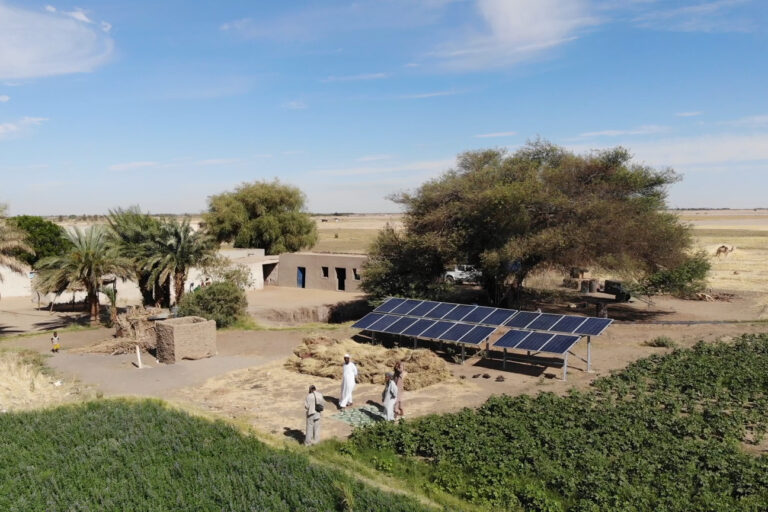
Solar panels in an arid part of Sudan.
9 stories

Negotiating Africa’s Energy Future

5 stories

The Great Insect Crisis

7 stories

Kafue River Transect

Free and open access to credible information

Learn more

Listen to Nature with thought-provoking podcasts

[DO NOT REUSE] Image by Ben Cherry. Courtesy of Netflix/Dian Fossey Gorilla Fund.

A new documentary film captures rare mountain gorilla behavior

Mike DiGirolamo 5 May 2026

Watch unique videos that cut through the noise

Collage, Jahëna Louisin, Mongabay reporter, and a Vodun ritual

Vodun's sacred role in saving West Africa’s mangroves

Rangers at Gashaka Gumti National Park, Nigeria

Defying conflict to track the world’s rarest chimpanzees

Leo Plunkett, Tom Richards, Sandy Watt 13 Apr 2026
Gold mine in the Dimonika Biosphere Reserve, the Republic of the Congo

What Republic of Congo’s gold rush is leaving behind

Berdy Pambou 17 Sep 2025
Woman farming seaweed at Pemba Island, Tanzania

Building a future from seaweed in coastal Tanzania

Lucia Torres 1 May 2025
Farmer in Mozambique. The price for Europe's packing paper boom

The price of Europe's paper packaging boom

Boaventura Monjane, Davide Mancini, Juan Maza 2 Apr 2025

We’re a nonprofit

Help us tell impactful stories of biodiversity loss, climate change, and more
Donate

In-depth feature stories reveal context and insight

Installing an IFAW-supported temporary solar fence in Chikomeni chiefdom, within the Malawi-Zambia Transfrontier Conservation Area, to deter human-elephant conflict. Image courtesy of IFAW.
Feature story

Radio and satellite alerts help Zambian farmers live with dangerous wildlife

Ryan Truscott 15 May 2026
White-bellied pangolin (Phataginus tricuspis) in Ondo state, Nigeria. Adedotun Ajibade via iNaturalist (CC BY-NC 4.0)
Feature story

Nigeria aims for stronger wildlife protections with sweeping new law

Valentine Benjamin 12 May 2026
Fredrick Njoroge Kariuki, left, and Miron Onsarigo, the Hewa Safi innovators. Image courtesy of Lemmuel Agina/The Earth Foundation.
Feature story

Teen innovators in Kenya turn farm waste into award-winning vehicle exhaust filter

Malavika Vyawahare, Mary Mwendwa 12 May 2026
A European roller (Coracias garrulus) at B'stonliq, Uzbekistan. Image by bereskletic via iNaturalist (CC BY-NC 4.0)
Feature story

From Africa to Central Asia, the European roller’s migration builds relationships

Terna Gyuse 9 May 2026

Quickly stay updated with our news shorts

Malawi officials seek to drop bribery case against illegal wildlife trafficking convict

Charles Mpaka 12 Jun 2026
Government officials in Malawi have applied to withdraw bribery charges against wildlife trafficking convict Lin Yunhua, which would pave the way for his release from prison. In July 2025, a presidential pardon set Lin, a Chinese national, free from a 14-year jail sentence he’d received in 2021 connected to illegally trading in wildlife parts such as ivory, rhino horn and pangolin scales. Malawian authorities had arrested Lin, his wife and 13 members of his transnational wildlife crime syndicate in 2019. While pardoned, Lin remained in prison on charges of bribing a prison official and a judge to influence his sentencing; offenses he allegedly committed while on trial for the wildlife crimes. The Director of Public Prosecutions (DPP) Fostino Maele, has now instructed the Anti-Corruption Bureau (ACB), which brought the bribery charges against Lin, to drop those charges. Maele was previously Lin’s lawyer. Environmental and anti-corruption activists demanded that he recuse himself from the case due to a conflict of interest. But Maele did not. At the time of publishing, Maele had not responded to questions from Mongabay about reasons for dropping the bribery charges and concerns of conflict of interest. “We have a serious contradiction here,” environmentalist Charles Mkoka told Mongabay in a phone interview. “We sit in one room and plan what to do to send a strong message to wildlife traffickers that we will not tolerate their crimes. In another room, some offices are scrapping off cases of those that are engaging in wildlife trafficking. This is regrettable.” The hearing on the corruption case started on May 13, and two prison officials had testified as state witnesses. The anti-corruption body’s chief legal and prosecution officer, Peter Sambani, said the DPP, in a letter on May 19, directed the ACB to withdraw the case. The ACB then applied for the case’s discontinuation at the High Court in Malawi’s capital, Lilongwe, on June 9. According to the Malawi Constitution, while the DPP has sole power over discontinuance of a case, he is required to provide reasons to the Parliament within 10 days. In an online petition, environmental and anti-corruption civil society organisations say discontinuing the case against Lin would lead to questions about Malawi's commitment to combating corruption and organized wildlife crime. Mkoka, who is also the executive director of the Coordination Union for Rehabilitation of the Environment (CURE) in Malawi, told Mongabay that the presidential pardon last year set a tone for the collapse of the bribery case as it undermined the work of law enforcement agencies that had arrested and prosecuted Lin. “Probably, we did not speak out hard enough against that pardon,” he said. “Now, we need to have a serious reflection [on] whether we still need laws that empower certain offices to set free high-profile wildlife offenders and whether those offices are using their powers responsibly.” Banner image: Lin Yunhua in a court appearance in May 2026 answering bribery charges. Image courtesy of Lloyd M’bwana.
Lin Yunhua in a court appearance in May 2026 answering bribery charges. Image courtesy of Lloyd M’bwana.

Mongabay Africa’s most-read stories so far in 2026

Mongabay.org 5 Jun 2026
From human-elephant coexistence to an alternative conservation model from the Democratic Republic of Congo, from teen innovators in Kenya to Guinea’s complicated experience with mining, the stories that attracted the most readers in the first five months of 2026 reflect the richness of Mongabay’s Africa coverage on World Environment Day, June 5, 2026. They also showcase the talents of a diverse reporting team and a strong and growing network of resident contributors. Electric fences help farmers and elephants coexist in Zambian borderlands: Contributor Ryan Truscott reports from eastern Zambia on an initiative aimed at protecting farmland from elephants, even as the pachyderms are forced into narrower corridors as habitats shrink. A unique clearing in Central Africa draws elephants from the dense forests: Mongabay Africa’s program director David Akana takes readers to the forest clearing of Dzanga Bai in the Central African Republic. A place where the naturally elusive forest elephants gather, sometimes in the hundreds, forming a “village of elephants.” Descendants of people pushed out for DRC national park lead forest conservation efforts:  Contributor Jérémie Kyaswekera brings a story of hope from the DRC, where descendants of  families that had to leave the forests of what is today an area in and around Maiko National Park are leading efforts to protect biodiversity through local conservation efforts. Teen innovators in Kenya turn farm waste into award-winning vehicle exhaust filter: Kenya-based contributor Mary Mwendwa teamed up with Mongabay Africa editor Malavika Vyawahare to profile young innovators who developed an exhaust filtration system that uses filters made from locally-sourced materials like coconut shells, maize cobs, steel mesh, copper and recycled materials from old batteries. The duo won the Africa edition of the Earth Prize. Hopes and fears as Guinea exports iron ore from Simandou mines:  Mongabay Africa features writer Ashoka Mukpo explains what makes the first shipment of iron ore from Guinea’s Simandou mines to China significant. The deep dive foregrounds the perils of extractives in a country with hopes of becoming one of the world’s leading iron ore producers. Banner image: Elephants in Dzanga Bai in the Central African Republic. Image by Rhett A. Butler/Mongabay.
“For mothers and young elephants, Dzanga Bai becomes something of a playground and a very safe place,” says Ivonne Kienast, project manager and head researcher of the Dzanga Forest Elephant Project. Image by Rhett A. Butler/Mongabay.

New records of ‘lost’ bamboo shark confirmed in Madagascar

Shreya Dasgupta 4 Jun 2026
For nearly 20 years, the blue-spotted bamboo shark, found only in Madagascar, went scientifically undetected and unrecorded. But researchers have now found four new records of the “lost” shark while surveying fishing villages and a Malagasy university’s fish collection. These recent records, and interviews with fishers, suggest the species may be more common than previously thought, according to a new report in Oryx.  The blue-spotted bamboo shark (Chiloscyllium caeruleopunctatum), so named for the blue-white spots on its brown body, was first described based on a specimen caught off Madagascar in 1914. A second record of the species came 92 years later — a photograph of a shark caught in 2006. Since then, the species largely went unconfirmed, until researchers began surveying fish markets and landing sites in Madagascar in September 2025. Report's lead author Tsarahasina Fanomenzana, a young Malagasy intern from the NGO Madagascar Whale Shark Project, was showing photos of sharks and rays he’d seen at a fishing village on the east coast to shark expert and co-author David Ebert. “One of the photos was of the blue-spotted bamboo shark,” Ebert told Mongabay by email. “He didn’t think too much of it as there were some other images of shark and ray species he thought were more interesting.” However, Ebert said he was “more than excited,” because the pictures confirmed the blue-spotted shark was still around. He was in Madagascar for the Lost Sharks project, supported by the Save Our Seas Foundation, which aims to find and raise awareness about little-known shark and ray species that could be disappearing unnoticed. Ebert and his colleagues eventually confirmed two more individuals of the shark from the fishing village, and a fourth specimen housed in the University of Tulear’s fish collection, on the west coast. “Since these new records were published I have had some more evidence in the forms of photos come out further confirming this species,” Ebert said. The blue-spotted bamboo shark is currently listed as data deficient on the IUCN Red List, meaning not enough is known about the species to determine its conservation status. The lack of information could partly be because the species is sometimes misidentified as the white-spotted bamboo shark (Chiloscyllium plagiosum), “so most Malagasy’s do not realize that it is endemic to Madagascar,” Ebert said. He added that interviews with fishers revealed they also mistake it for young leopard sharks, also called zebra sharks (Stegostoma tigrinum). “So, I believe now that [the blue-spotted bamboo shark] is more common than previously thought, but due to its being misidentified it has been underreported,” Ebert said. “Hopefully, now that people in Madagascar are more aware of it, they will start to note its occurrence going forward.” Ebert added that whether these additional new records will prompt the IUCN, the global wildlife conservation authority, to revisit the shark’s conservation status is unclear, “but hopefully we can build more information for the future such that when the time does come to review it, we might be able to elevate the assessment.” Banner image: A blue-spotted bamboo shark photographed in Madagascar in 2025. Image courtesy of Tsarahasina Fanomenzana.
A blue-spotted bamboo shark photographed in Madagascar in 2025. Image courtesy of Tsarahasina Fanomenzana.

Chimpanzees vs. a mega railway

Juan Maza 3 Jun 2026
A massive railway project, The Simandou corridor, in Guinea is cutting through one of West Africa’s most important ecosystems. The Simandou corridor is fragmenting forests that are home to the largest population of endangered western chimpanzees, putting their survival at risk. But why is this massive railway project being built? Deep within Guinea’s forests lie the world’s largest untapped iron ore deposits, and they require infrastructure to enter the global supply chain. However, as tracks slice through the rainforest, wildlife is pushed into smaller, isolated areas, making survival harder than ever.
Western chimpanzee (Pan troglodytes verus) Critically endangered subspecies of the common chimpanzee. Guinea Conakry

White rhinos are back in Uganda

Juan Maza 26 May 2026
Uganda was home to around 300 Northern white rhinos, but after years of intense poaching, the population disappeared, with the last wild rhino killed in 1983. But now, they are back. In 2005, a breeding program for rhinos was established at Ziwa Rhino Sanctuary, and authorities are now reintroducing them to Kidepo Valley National Park in the north of the country. Conservationists believe that this will not only create a stronghold for rhinos, but their presence will also support the local economy through tourism and conservation-related activities.
Northern white rhinos, Uganda

Gunmen kill two rangers in latest deadly attack in DRC’s Virunga National Park

David Akana 22 May 2026
Gunmen have killed two rangers in Virunga National Park in the Democratic Republic of Congo, the latest deadly attack in a region roiled by militia violence. Park sources said a heavily armed group opened fire on a control post at Kamuhororo, on the southern shore of Lake Edward inside Virunga, early on May 21. Kasereka Valyathire Baraka, 35, and Munguakonkwa Mihigo Jacques, 34, the rangers on duty at the time, were both killed, according to national park officials. The killings underscore the extreme risks facing conservation personnel in the eastern DRC. Instability here stems from overlapping conflicts between rebel groups including M23, Mai-Mai and scores of militias. Virunga has recorded more ranger deaths than any other protected area in the DRC, making it one of the world’s most dangerous conservation posts. It’s also a UNESCO World Heritage Site and biodiversity hotspot, home to two species of great apes: eastern gorillas (Gorilla beringei) and chimpanzees (Pan troglodytes). Park officials said they haven’t yet identified the attackers. The provincial office of the Congolese Institute for Nature Conservation (ICCN), the government agency that manages the DRC’s national parks, described the attack as “odious and unacceptable.” “We call for a thorough and urgent investigation to bring the perpetrators and their sponsors to justice,” Emmanuel de Merode, director of Virunga National Park, said in a statement obtained by Mongabay. More than 200 rangers have been killed in Virunga National Park in the last century. Rangers are often outnumbered by armed groups in the region. There’s also hostility toward the park among some segments of the local population. Officials say Virunga and other protected areas can only be successful if they can create a better conservation-based economy than the war-based economy, which many armed groups depend on. “If conservation creates hardships, it won’t work,” De Merode told Mongabay recently. “We cannot tell people not to use natural resources without offering them an alternative,” he added, referring to efforts by the park to support alternative livelihoods for surrounding communities. Mongabay has been documenting violence in and around Virunga National Park for more than a decade.
  • He survived a deadly attack, now he is calling for better working conditions for rangers in DRC
  • Twelve rangers killed in latest Virunga park incident
  • Six rangers killed in deadly militia attack in DRC’s Virunga National Park
  • Eight rangers, soldiers killed in Virunga National Park
  • Six staff killed in deadliest attack at Congo’s Virunga National Park
Despite the latest deaths, officials have reiterated their determination to continue protecting Virunga. In the statement obtained by Mongabay, officials said the park management “reaffirms its unwavering determination to continue its mission of conserving and preserving the Congolese natural heritage, whatever the threats and trials.” Banner image: Kasereka Valyathire Baraka, left, and Munguakonkwa Mihigo Jacques were the latest Virunga rangers killed in the line of duty. Images courtesy of Virunga National Park.
Kasereka Valyathire Baraka, left, and Munguakonkwa Mihigo Jacques were the latest Virunga rangers killed in the line of duty. Images courtesy of Virunga National Park.

Share Short Read Full Article

Share this short

If you liked this story, share it with other people.

Facebook Linkedin Threads Whatsapp Reddit Email

Subscribe

Stay informed with news and inspiration from nature’s frontline.
Newsletter

News formats

  • Videos
  • Podcasts
  • Articles
  • Specials
  • Shorts
  • Features
  • The Latest

About

  • About
  • Contact
  • Donate
  • Impacts
  • Newsletters
  • Submissions
  • Terms of Use

External links

  • Wild Madagascar
  • For Kids
  • Mongabay.org
  • Reforestation App
  • Planetary Health Check
  • Conservation Effectiveness
  • Mongabay Data Studio

Social media

  • LinkedIn
  • Instagram
  • Youtube
  • X
  • Facebook
  • Tiktok
  • Reddit
  • BlueSky
  • Mastodon
  • Android App
  • Apple News
  • RSS / XML

© 2026 Copyright Conservation news. Mongabay is a U.S.-based non-profit conservation and environmental science news platform. Our EIN or tax ID is 45-3714703.