• Features
  • Videos
  • Podcasts
  • Specials
  • Articles
  • Shorts
Donate
    • English
    • Français
    • Swahili
  • English
  • Español (Spanish)
  • Français (French)
  • Bahasa Indonesia (Indonesian)
  • Brasil (Portuguese)
  • India (English)
  • हिंदी (Hindi)
  • বাংলা (Bengali)
  • Swahili
  • Videos
  • Podcasts
  • Articles
  • Short News
  • Feature Stories
  • The Latest
  • Explore All
  • About
  • Team
  • Contact
  • Donate
  • Subscribe page
  • Submissions
  • Privacy Policy
  • Terms of Use
  • Advertising
  • Wild Madagascar
  • For Kids
  • Mongabay.org
  • Reforestation App
  • Planetary Health Check
  • Conservation Effectiveness
  • Mongabay Data Studio

Latest

South African cheetah

This is a South African cheetah, and it’s in trouble

Juan Maza, Victoria Schneider 11 Oct 2026
Feature story

Fishmeal factories take Senegal’s fish from the dinner table

Ian Urbina 9 Oct 2026

Ethiopian highlands yield a new species of egg-eating snake

Naina Rao 9 Oct 2026

Counterfeit seeds threaten African farmers’ crops and climate resilience: Study

David Brown 8 Oct 2026

Despite legacy court case, Zambian Vedanta mine pollution continues

Victoria Schneider 8 Oct 2026

Africa’s monitored wildlife populations declined 80% since 1970, new report says

David Akana 7 Oct 2026
All news

Top stories

Fishers at work in artisanal fishing pirogues with seine nets off the Senegalese coast, Kafountine, Casamance. Image © Clément Tardif for Greenpeace.

Fishmeal factories take Senegal’s fish from the dinner table

A Landscape Alliance staffer kneels beside a coppicing stump of a wild loquat tree

Scientists clone Southern Africa’s wild fruit trees as forests disappear

Ryan Truscott 25 Sep 2026
A Ghana cuckooshrike in Côte d’Ivoire.

‘Lost’ bird reappears in West Africa’s forests after more than a decade

John Cannon 24 Sep 2026
GCF and team members observe giraffes in the capture funnel.

First Angolan giraffes return to Bicuar National Park after 25 years

Alex Megerle 23 Sep 2026
KWD1980, a wild dog from Zambia’s Kafue National Park

‘A good way to die’: Triumph and tragedy among dispersing African wild dogs

Ryan Truscott 16 Sep 2026

Subscribe

Stay informed with news and inspiration from nature’s frontline.
Newsletter

We’re a nonprofit

Help us tell impactful stories of biodiversity loss, climate change, and more
Donate

News and Inspiration from Nature's Frontline.

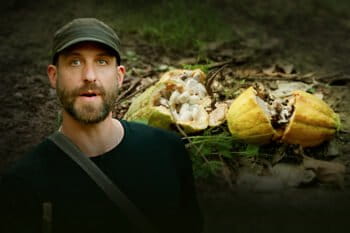
A collage featuring Ashoka Mukpo, a Mongabay reporter, and a cocoa bean
Videos
Fishers at work in artisanal fishing pirogues with seine nets off the Senegalese coast, Kafountine, Casamance. Image © Clément Tardif for Greenpeace.
Articles
Podcasts

Special issues connect the dots between stories

Guinea’s Iron Frontier

The Nimba mountain range as seen from southern Guinea. Image by Maarten van der Bent via Flickr (CC BY-SA 2.0).

In the Nimba Mountains, a film examines the paradox of mining-funded conservation

Ashoka Mukpo 8 May 2026
Loading a barge with iron ore from Simandou. Image by Paul Kagame via Flickr (CC BY-NC-ND 4.0)

Hopes and fears as Guinea exports iron ore from Simandou mines

Ashoka Mukpo 16 Jan 2026
Myotis nimbaensis, shown here, is a new species of bat named for the mountain range in which it is found, the Nimba Mountains in West Africa. Photo © Kendra Snyder / Bat Conservation International.

Rare bats at risk as iron ore mine advances in Guinea’s Nimba Mountains

Victoria Schneider 30 Dec 2025
a western chimpanzee in a tree

Setback for Guinea mine that threatens World Heritage chimp reserve

Ashoka Mukpo 15 May 2024
Guinea’s Iron Frontier series

More specials

8 stories

Who controls Indian Ocean tuna?

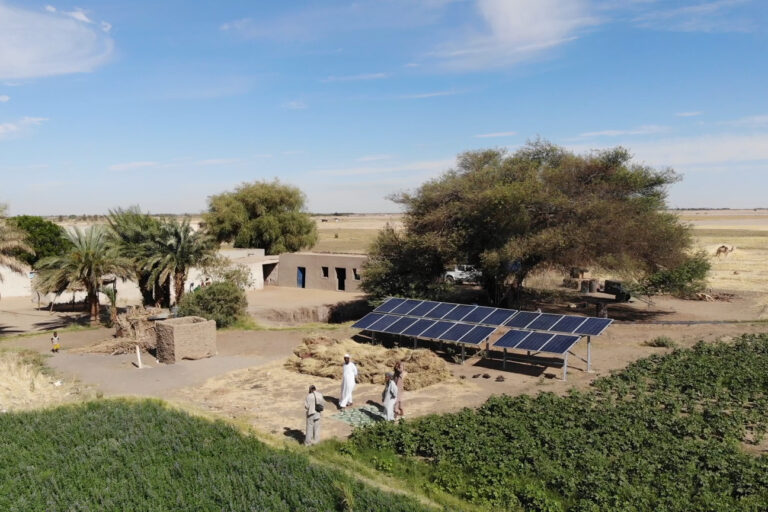
Solar panels in an arid part of Sudan.
9 stories

Negotiating Africa’s Energy Future

5 stories

The Great Insect Crisis

Free and open access to credible information

Learn more

Listen to Nature with thought-provoking podcasts

‘Remembering Wildlife' shines a spotlight on the species we risk losing forever

Mike DiGirolamo 18 Aug 2026

Watch unique videos that cut through the noise

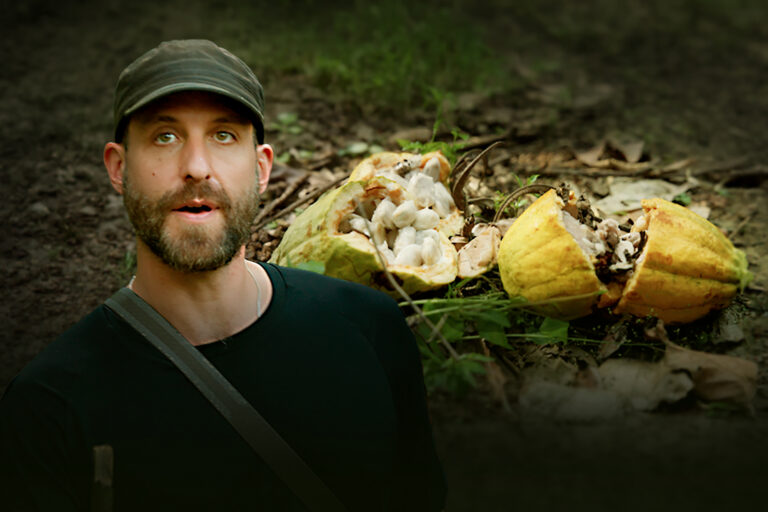
A collage featuring Ashoka Mukpo, a Mongabay reporter, and a cocoa bean

Why are forests vanishing in southeastern Liberia?

Collage, Jahëna Louisin, Mongabay reporter, and a Vodun ritual

Vodun's sacred role in saving West Africa’s mangroves

Jahëna Louisin 9 May 2026
Rangers at Gashaka Gumti National Park, Nigeria

Defying conflict to track the world’s rarest chimpanzees

Leo Plunkett, Tom Richards, Sandy Watt 13 Apr 2026
Gold mine in the Dimonika Biosphere Reserve, the Republic of the Congo

What Republic of Congo’s gold rush is leaving behind

Berdy Pambou 17 Sep 2025
Woman farming seaweed at Pemba Island, Tanzania

Building a future from seaweed in coastal Tanzania

Lucia Torres 1 May 2025

We’re a nonprofit

Help us tell impactful stories of biodiversity loss, climate change, and more
Donate

In-depth feature stories reveal context and insight

Saruni, a male giant ground pangolin
Feature story

Electric fences that kill and the Maasai trying to save Kenya’s last giant pangolins

Pauline Kairu 15 Sep 2026
Wildlife of all kinds is for sale in Bangkok’s Chatuchak Market’s ‘Pets’ zone, with growing numbers coming from Latin America.
Feature story

Why is Amazonian wildlife turning up at a Bangkok market?

Gloria Dickie 8 Sep 2026
DO NOT REUSE A Rüppell's vulture, in Boma National Park, South Sudan. Image © Marcus Westberg.
Feature story

World Heritage status for South Sudan parks will be a boon for the birds

Ryan Truscott 7 Sep 2026
The southern greater kudu
Feature story

South Africa’s new gold rush: Big promises, closed books in new carbon frontier

Leonie Joubert 3 Sep 2026

Quickly stay updated with our news shorts

This is a South African cheetah, and it’s in trouble

Juan Maza, Victoria Schneider 11 Oct 2026
When researchers mapped almost 100,000 square kilometers of South Africa, or nearly 40,000 square miles, they only found 83 mature adults. They called their project the Free-Roaming Cheetah Census, and it’s the most comprehensive survey of cheetahs ever conducted in the region. The cheetahs that inhabit the unprotected areas here move naturally across borders, going between South Africa, Botswana, Namibia, and Zimbabwe. But farming, construction, development, and fences are making it harder for them to move around. Cheetahs need vast connected landscapes to survive. If they don’t mix with other cheetah groups, their genetic pool can be lost. There’s another big challenge for these animals: farmers. They sometimes kill cheetahs, because they believe cheetahs kill their livestock. But the researchers found that cheetahs hunt mostly wild prey. The species is currently listed as vulnerable, but the census suggests they should be reclassified as endangered in South Africa.
South African cheetah

Ethiopian highlands yield a new species of egg-eating snake

Naina Rao 9 Oct 2026
A new-to-science species of egg-eating snake has been documented in the forested mountains of southern Ethiopia, according to a recent study. The snake, which has an ink-black body, bluish skin between its scales, and stark-white throat and belly, has been named the white-throated egg-eater (Dasypeltis albigularis). It’s nonvenomous, feeding entirely on bird eggs, which it cracks using specially adapted vertebrae in its throat before swallowing, the authors say. Arthur Tiutenko of Germany’s University of Erlangen-Nuremberg, and his colleagues, first encountered a population of this snake in 2019 in the Harenna Forest, in the Bale Mountains. They collected a young female for identification and initially thought it was an African egg-eating snake (Dasypeltis atra), a similar black, nonvenomous species. But the team also noticed the juvenile had some unusual scales and coloration that differed from the known D. atra. These observations prompted captive-breeding trials, where the researchers mated the female with a male African egg-eating snake, and saw that their offspring showed a mix of traits from both parents. Further genetic analysis and examination of more individuals seen on future field trips confirmed the snake in the Harenna Forest was indeed new to science. “In the case of D. albigularis, it was a classic discovery, like in previous centuries, when one encounters an animal in a place previously not visited by researchers and recognizes it as something new,” Tiutenko told Mongabay by email. To formally describe a new species, researchers would typically have to deposit a dead, preserved physical specimen, known as the holotype, in a museum collection. For Tiutenko’s team, though, this posed an ethical dilemma. Some recent studies have relied on photos and videos alone to describe a species, but Tiutenko said this too has been criticized by the scientific community. He added that using a live individual to represent a species in a collection is also a bad idea, because such a specimen can escape, and its features can change over time as it ages. “And such values of an old animal that died years later and finally became preserved would almost certainly differ from those stated in the paper.” Tiutenko said he didn’t want to euthanize a snake for the purpose of describing the species. So he waited for several years, until a dead snake showed up. "As soon as I found a dead specimen killed by local villagers, I could designate it as holotype and proceed with the publication,” he said. Their analysis showed the white-throated egg-eater is likely endemic to the southern slope of the Somalian Plateau, frequenting natural forest, agricultural clearings, and village settlements. Tiutenko added it’s not yet confirmed whether the species is present in Bale Mountains National Park. Human persecution remains the primary danger to the snake, Tiutenko noted. “Although no dangerous snakes live in this area, people fear or disgust any snakes and kill them,” he said. Banner image of Dasypeltis albigularis, by Tiutenko et al., 2026 (CC BY 4.0).

Counterfeit seeds threaten African farmers’ crops and climate resilience: Study

David Brown 8 Oct 2026
In Africa, high-quality seeds can produce improved crops with enhanced nutrition, pest-resistance, and drought tolerance. However, such seeds for maize, vegetables, and cereal crops can be indistinguishable from counterfeit, or “fake” seeds. That’s creating a massive potential for fraud in seed quality that can potentially deprive farmers of access to climate-resilient seeds while putting their harvests and incomes at risk. A group of researchers analyzed the efforts of 50 African countries to combat counterfeit seeds. They found a wide range of penalties for selling them across different governments, and concluded that a significant gap exists between government policy commitments and implementation, largely due to limited capacity. Study lead author Ed Mabaya, a professor of global development at Cornell University in the U.S., told Mongabay, “For most smallholder farmers in Africa, planting happens once a season, often timed to the first rains. A farmer who buys counterfeit seed usually finds out only after planting, when the seed fails to germinate or the crop grows poorly. By then it is usually too late to replant, so the loss is not a slightly smaller harvest but potentially the whole season's food and income.” That can lead to food insecurity for the individual farmer and local markets more broadly. Counterfeiters can dye or repackage grain and sell it as branded, certified seed, Mabaya said. “The problem arises because certified seed looks exactly like ordinary grain but sells for a much higher price, in some cases several times more for hybrid maize. That price gap creates a strong incentive for fraud.” Counterfeit seed can also erode trust in the benefits of high-quality seeds; a farmer burned once may stop buying enhanced seed altogether, which slows the adoption of climate-adapted crop varieties. Farmers can then miss out on drought tolerance, disease resistance, and better nutrition through crops like vitamin A-fortified maize and iron-rich beans. Mabaya said a multipronged approach is needed to combat counterfeit seeds including routine surveillance, inspection, and market sampling by regulators. Seed companies also need to report suspect products. Mabaya recommended that governments develop public awareness programs to teach farmers how to recognize certified seed, where to buy it, and how to report seeds that may be counterfeit. He said governments also need clear penalties for counterfeit seeds, which are kept up to date and enforced, so that counterfeiting carries real costs. Travis Lybbert, an agricultural economist at the University of California, Davis, in the U.S., who works on seed quality issues in Africa but wasn’t involved in the recent study, agreed that seed quality in general is a major issue in much of Africa. “Counterfeit seeds are a part of this problem — in some countries they are a big part of the problem, but not in all. The paper seems to capture this reality pretty well,” he said in an email to Mongabay. Banner image: Bean market in Kampala, Uganda. Image © 2009 CIAT/Neil Palmer via Flickr (CC BY-SA 2.0).

Despite legacy court case, Zambian Vedanta mine pollution continues

Victoria Schneider 8 Oct 2026
The Zambian government is investigating a chemical spill in its Copperbelt Province allegedly linked to Konkola Copper Mines (KCM), owned by U.K.-based multinational Vedanta Resources. Residents in Chingola district told Mongabay they observed discoloration of the Kafue River and fish die-off on Sept. 28, raising fresh concerns about the environmental and social impacts of mining operations in one of Zambia’s most important copper-producing regions. According to a statement by Gilbert Siame, Zambia’s minister of Green Economy and Environment (MGEE), the incident was caused by a leaking pipe at KCM’s tailings leach plant and an overflow from the company’s pollution control dam outside Chingola. “The pollution control dam was full, that's why it spilled,” Eugene Mulenga, Chingola-based human rights activist and coordinator for caritas, told Mongabay. “The [chemical] discharge happens all the time, mostly at night, and the local residents consume this water because they don’t have another option.” Following the Sept. 28 spill, tests conducted by the Zambia Environmental Management Agency (ZEMA), KCM and local water utility Mulonga Water Supply and Sanitation Company showed elevated levels of turbidity and conductivity downstream along the Kafue River. In a statement issued Oct. 1, KCM contested its responsibility in the spillage, saying that company officials reported the incident to ZEMA and asked for a fact-based investigation. Mongabay reached out to the company but did not receive a response by the time of publication. Siame noted in the statement shared with Mongabay that authorities are still testing water samples to confirm heavy metals and other contaminants. He added the ministry has ordered KCM to conduct a comprehensive assessment of its pollution control dams, tailings pipelines and related infrastructure to determine whether other facilities could pose environmental risks. “The Ministry is consulting with relevant stakeholders on the appropriate penal sanctions against the polluter in accordance with the provisions of the Environmental Management Act,” he wrote in the statement. Under this law, major toxic discharges or hazardous waste violations can result in penalties of up to 280,000 Kwacha ($14,000). The Sept. 28 incident adds to a long history of environmental concerns surrounding KCM and other mining companies operating in Zambia’s Copperbelt. KCM was previously at the center of a major legal case in the U.K. following a 2008 pollution incident. The case was settled out of court in 2021, with the company paying compensation to around 2,500 affected villagers “without admission of liability.” KCM, one of Zambia’s largest copper producers, is expanding and recapitalizing mining and processing operations in the country as the government seeks to more than triple national copper output in the coming years. Vedanta Resources owns 80% stake in KCM. The Zambian government had placed KCM into liquidation in 2019, citing concerns including tax evasion, unpaid debts, inadequate investment and environmental pollution, but the company picked up operations again in 2024. Banner image: Dead fish at Hippo Pool, north of Chingola, where the Kafue River narrows into a shallow valley. Image by Victoria Schneider for Mongabay.
Dead fish at Hippo Pool, north of Chingola, where the Kafue River narrows into a shallow valley. Image by Victoria Schneider for Mongabay.

Africa’s monitored wildlife populations declined 80% since 1970, new report says

David Akana 7 Oct 2026
Africa’s monitored wildlife populations have declined an average of 80% since 1970, according to a new global assessment. The report also points to pockets of recovery where conservation efforts have been maintained over decades. The report on the decline in the average size of monitored populations was released Oct. 8 in the Living Planet Report 2026. It tracked monitored populations of mammals, birds, fish, reptiles and amphibians between 1970 and 2022. Africa’s 80% decline compares with a global average of 73%; Latin America and the Caribbean recorded the largest regional decline, at 95%. The findings come as governments prepare to assess progress on the Kunming-Montreal Global Biodiversity Framework, whose 23 targets include commitments to halt human-induced extinctions and support the recovery of threatened species by 2030. The framework also calls for conserving at least 30% of the world’s land, inland waters and seas by 2030. The Living Planet Index, managed by the Zoological Society of London in partnership with the World Wide Fund for Nature (WWF), draws on 35,803 population trends from 5,790 vertebrate species worldwide. The index measure changes in the average size of monitored populations, it does not mean that Africa lost 80% of its wild animals or wildlife species, a press release obtained by Mongabay cautions. Habitat destruction and degradation are the most frequently reported pressures on the wildlife populations tracked globally, the report finds. Overexploitation, climate change, pollution, disease and invasive species are among the other threats identified. In the Congo Basin, for example, those pressures include expanding agriculture, logging and mining, as well as roads and other infrastructure that fragment forests and make previously remote areas more accessible, according to the report. Hunting and poaching add to the pressure. WWF says African forest elephant (Loxodonta cyclotis) populations have fallen by more than 60% over recent decades, largely because of habitat loss and illegal killing for ivory. “Reversing this trend requires coordinated action across governments, civil society and other sectors, with Indigenous Peoples and local communities at the centre,” said Nadège Nzoyem, WWF’s regional director for the Congo Basin, in the release. The global numbers show that conservation can make a difference. Half the populations included in the index are either stable or increasing but steep declines among the remaining populations are large enough to pull the overall index sharply downward. As an example, in Southern Africa savanna elephants (Loxodonta africana) remain endangered and are declining across much of their range, the report reveals. But some populations are increasing in places where communities help directly manage wildlife and benefit from doing so. Those efforts have been accompanied by anti-trafficking measures, judicial reforms and efforts to reduce corruption. The report argues protecting individual species and habitats will not be enough. Food and energy production as well as financial systems are underlying forces that must also change to reverse biodiversity decline, the report notes. Banner image: Namibian elephants in Etosha. Image courtesy of Stephan Scholvin.

Rare Southern African succulent listed as critically endangered amid mining threat

Victoria Schneider 5 Oct 2026
The brown clockfig, an extremely rare succulent growing in the hot, arid border region of Namibia and South Africa, was recently assessed as critically endangered by the IUCN, the global wildlife conservation authority. The western Gariep Valley is a vast landscape spanning the southern part of Tsau ǁKhaeb National Park in Namibia and the Richtersveld region of Northern Cape province in South Africa. It’s in this harsh environment, shaped by extreme heat and dryness, that the brown clockfig (Cheiridopsis brownii) grows on quartz ridges, shale, gravel, and sandy soils, and in cracks and fissures in desert mountains. The IUCN estimates the species, with thick leaves and daisy-like yellow flowers, has a total range of 424 square kilometers (164 square miles) in the valley, but occupies only around 60 km2 (23 mi2) of this area. Habitat loss due to overgrazing is among its major threats. Another is the demand for mineral resources such as diamonds, with mining permits being issued across the region. That’s placed more of the species’ already limited habitat under pressure in both South Africa and Namibia. “The vast desertification of the Aniesvlakte [plain in South Africa's Richtersveld region] as a direct result of severe overgrazing, as well as the mass desertification caused by sand moving from the coast due to unrehabilitated mines, are threatening to swallow most of the remaining population in South Africa,” Pieter van Wyk, a botanist with South African National Parks (SANParks), who carried out the most recent assessment, told Mongabay via email. Another threat comes from new green-energy developments — massive-scale green hydrogen projects — planned over vast sections of where this species occurs, van Wyk said. Additionally, a prolonged drought from 2012-202, combined with other factors, resulted in a decline in the species’ population of 50-90% since 1992. Climate change is expected to intensify these pressures, bringing higher temperatures and declining rainfall to the region. By 2052, the IUCN assessment projects that another 80-100% of the population could be lost. It adds that targeted conservation activities are not currently being conducted for the plant. Van Wyk said it’s crucial to protect all the brown clockfigs in the extremely dry, low-lying areas of the Gariep Desert adjacent to the Oranje River, since they support insects that in turn sustain the region’s highly arid- and heat-adapted spiders and reptiles. However, the species’ population has reached levels so concerning that the Richtersveld Desert Botanical Garden, founded and curated by van Wyk, has started collecting specimens for conservation. This includes seeds that van Wyk collected in 2021 from an area where populations were designated to be destroyed for diamond mines. Van Wyk said it “remains shocking” that a highly resilient species like the brown clockfig can easily grow in circumstances where no human can survive, yet “simply cannot survive the land use practices” wrought by humans. Banner image: A brown clockfig in South Africa’s Gariep Valley. Image © pietermier via iNaturalist (CC BY-NC 4.0).
A brown clockfig in South Africa’s Gariep Valley. Image © pietermier via iNaturalist (CC BY-NC 4.0).

Share Short Read Full Article

Share this short

If you liked this story, share it with other people.

Facebook Linkedin Threads Whatsapp Reddit Email

Subscribe

Stay informed with news and inspiration from nature’s frontline.
Newsletter

News formats

  • Videos
  • Podcasts
  • Articles
  • Specials
  • Shorts
  • Features
  • The Latest

About

  • About
  • Contact
  • Donate
  • Impacts
  • Newsletters
  • Submissions
  • Terms of Use

External links

  • Wild Madagascar
  • For Kids
  • Mongabay.org
  • Reforestation App
  • Planetary Health Check
  • Conservation Effectiveness
  • Mongabay Data Studio

Social media

  • LinkedIn
  • Instagram
  • Youtube
  • X
  • Facebook
  • Tiktok
  • Reddit
  • BlueSky
  • Mastodon
  • Android App
  • Apple News
  • RSS / XML

© 2026 Copyright Conservation news. Mongabay is a U.S.-based non-profit conservation and environmental science news platform. Our EIN or tax ID is 45-3714703.