• Features
  • Videos
  • Podcasts
  • Specials
  • Articles
  • Shorts
Donate
    • English
    • Français
    • Swahili
  • English
  • Español (Spanish)
  • Français (French)
  • Bahasa Indonesia (Indonesian)
  • Brasil (Portuguese)
  • India (English)
  • हिंदी (Hindi)
  • বাংলা (Bengali)
  • Swahili
  • Videos
  • Podcasts
  • Articles
  • Short News
  • Feature Stories
  • The Latest
  • Explore All
  • About
  • Team
  • Contact
  • Donate
  • Subscribe page
  • Submissions
  • Privacy Policy
  • Terms of Use
  • Advertising
  • Wild Madagascar
  • For Kids
  • Mongabay.org
  • Reforestation App
  • Planetary Health Check
  • Conservation Effectiveness
  • Mongabay Data Studio

Latest

Conservationists got delayed access to court-ordered inspection of Nairobi National Park

Lynet Otieno 24 Jul 2026

Ghana's High Court sentences politician to 20 years in illegal mining case

Mabel Adorkor Annang 24 Jul 2026

One scientist’s mission to save Ghana’s disappearing guitarfish

Awudu Salami Sulemana Yoda 24 Jul 2026

First sighting of African wild dogs in Malawi national park in more than 10 years

Ryan Truscott 24 Jul 2026

A Tunisian phosphate plant that sickens children so US, Europe can get fertilizer

Khadija Ben Salah, Dawn Kikel, Elisângela Mendonça 22 Jul 2026

‘We couldn’t breathe’: DRC villagers revive protest against Perenco over pollution

Elodie Toto 21 Jul 2026
All news

Top stories

Tigers in Rajasthan, India. The country is a stronghold of wild tigers, and the report found that most of the wild tigers smuggled into Cambodia came from India.

Report reveals Cambodia’s appetite for tigers, rhinos and other endangered wildlife

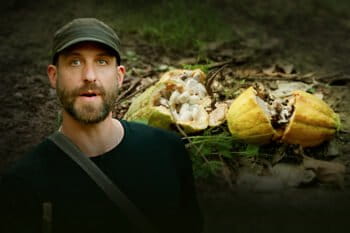
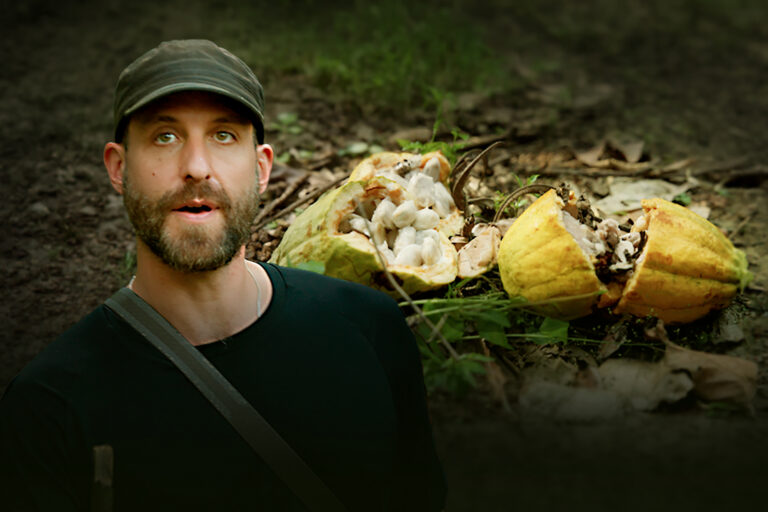
A collage featuring Ashoka Mukpo, a Mongabay reporter, and a cocoa bean

Why are forests vanishing in southeastern Liberia?

Juan Maza, Ashoka Mukpo 18 Jul 2026
Packaging cocoa beans in Grand Gedeh, Liberia. Photo by Ashoka Mukpo for Mongabay.

The vanishing forests on Liberia’s cocoa frontier

Ashoka Mukpo 16 Jul 2026

The women leading a quiet conservation revolution in a Nigerian gorilla sanctuary

Orji Sunday 6 Jul 2026
A leopard in Pendjari NP, in 2022. Camera traps were placed along likely travel routes and positioned to photograph both sides of the leopards to aid with identification. The researchers were able to identify 30 individual leopards from their unique spot patterns. Image courtesy of ZSL-CCI/Panthera/APN-Pendjari National Park.

Endangered West African leopards show signs of recovery, despite odds. 'It's a win'

Ruth Kamnitzer 2 Jul 2026

Subscribe

Stay informed with news and inspiration from nature’s frontline.
Newsletter

We’re a nonprofit

Help us tell impactful stories of biodiversity loss, climate change, and more
Donate

News and Inspiration from Nature's Frontline.

A collage featuring Ashoka Mukpo, a Mongabay reporter, and a cocoa bean
Videos
A mine site at Samreboi, Western Region, Ghana in 2022. Image courtesy of Erastus Asare Donkor
Articles
[DO NOT REUSE] Image by Ben Cherry. Courtesy of Netflix/Dian Fossey Gorilla Fund.
Podcasts

Special issues connect the dots between stories

Who controls Indian Ocean tuna?

A whale shark (Rhincodon typus). Image courtesy of Iris Ziegler.

Tuna talks bring wins for Indian Ocean sharks, but more needed, experts say

Malavika Vyawahare 1 May 2025
Yellowfin tuna catch laid out on leaves.

As one Indian Ocean tuna stock faces collapse, nations scramble to save others

Malavika Vyawahare 29 May 2023

Critics allege EU’s ‘toxic collusion’ with fishing lobbies is damaging Indian Ocean tuna

Malavika Vyawahare 7 Feb 2023

‘Watered-down’ plan to save Indian Ocean yellowfin tuna disappoints conservationists

Malavika Vyawahare 17 Jun 2021
Who controls Indian Ocean tuna? series

More specials

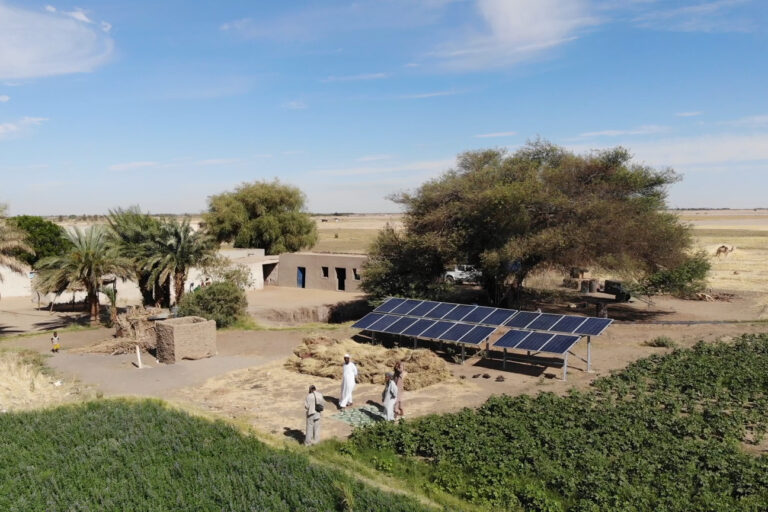
Solar panels in an arid part of Sudan.
9 stories

Negotiating Africa’s Energy Future

5 stories

The Great Insect Crisis

7 stories

Kafue River Transect

Free and open access to credible information

Learn more

Listen to Nature with thought-provoking podcasts

[DO NOT REUSE] Image by Ben Cherry. Courtesy of Netflix/Dian Fossey Gorilla Fund.

A new documentary film captures rare mountain gorilla behavior

Mike DiGirolamo 5 May 2026

Watch unique videos that cut through the noise

A collage featuring Ashoka Mukpo, a Mongabay reporter, and a cocoa bean

Why are forests vanishing in southeastern Liberia?

Collage, Jahëna Louisin, Mongabay reporter, and a Vodun ritual

Vodun's sacred role in saving West Africa’s mangroves

Jahëna Louisin 9 May 2026
Rangers at Gashaka Gumti National Park, Nigeria

Defying conflict to track the world’s rarest chimpanzees

Leo Plunkett, Tom Richards, Sandy Watt 13 Apr 2026
Gold mine in the Dimonika Biosphere Reserve, the Republic of the Congo

What Republic of Congo’s gold rush is leaving behind

Berdy Pambou 17 Sep 2025
Woman farming seaweed at Pemba Island, Tanzania

Building a future from seaweed in coastal Tanzania

Lucia Torres 1 May 2025

We’re a nonprofit

Help us tell impactful stories of biodiversity loss, climate change, and more
Donate

In-depth feature stories reveal context and insight

A man fishes in the Niger Delta near the village of Diebu, Nigeria, Saturday, May 18, 2013. Image by Jon Gambrell / AP Photo.
Feature story

Despite oil spills in Nigeria's mangrove forests, Shell continued operations, documents show

Victoria Schneider, David Akana 6 Jun 2026
Lee White managed Gabon’s national parks for 10 years before becoming environment minister. Photo taken from his Facebook page.
Feature story

Carbon cowboys and unpaid pledges: Ex-Gabon environment minister Lee White on conservation in Africa

Elodie Toto 25 May 2026
A boy gathers water in Kalokol, with submerged palm trees behind. Image by Christopher Clark for Mongabay.
Feature story

Rising waters and mounting pressures collide on Kenya’s Lake Turkana

Christopher Clark 19 May 2026
African savanna elephants are endangered, after years of poaching for their ivory, decimated their numbers. Now, their habitats are fast-shrinking due to human activities.
Feature story

Trump called trophy hunting a “horror show,” but permitted 300-plus elephant trophy imports in 2025

Spoorthy Raman 18 May 2026

Quickly stay updated with our news shorts

Conservationists got delayed access to court-ordered inspection of Nairobi National Park

Lynet Otieno 24 Jul 2026
The Kenya Wildlife Service (KWS) has been accused of harassing co-petitioners in a case challenging the relocation of the Nairobi Animal Orphanage to make it part of the larger Bomas International Conference Complex. The proposal would carve out between 76 and 89 acres inside Nairobi National Park for upgrades to wildlife rescue and rehabilitation facilities. Conservationists are concerned that the facility, which will include parking for 1,300 vehicles, poses threats to a protected indigenous forest and habitat for the critically endangered black rhino. On July 16, the Environment and Land Court in Nairobi ordered its deputy registrar Vincent Kiplagat to visit the park in the presence of all parties to prepare and file a report about the proposed facility. The Nairobi-based NGO Save the Nairobi National Park (SaveNNP) said it was denied court-ordered access to the site. In a statement sent to Mongabay, SaveNNP condemned “threats and intimidation” by KWS personnel. In the same statement, SaveNNP and JustAct, another Nairobi-based NGO, accused the KWS of planning to “control the narrative and ensure the voice of Kenyans was not heard by the courts or the media while on site.” Similar claims were made by Friends of Nairobi National Park. Mongabay asked KWS spokesperson Duncan Wanyama for a comment and was referred to a local media report in which Wanyama said the visitors were not obstructed and that rangers were just enforcing standard protocols within the park. The activists said they were later allowed in, but “only once the court officers, KWS representatives, members of the media, and the sole legal representative of the co-petitioners who they allowed to enter the park, had completed the site visit.” The KWS has defended the project, saying it will include better facilities, such as a wildlife hospital, visitor amenities and more space for wildlife rescue cases. It will also be an economic boon to the region and employ roughly 500 people, KWS has said. At least 4,642 Kenyans have since signed a petition asking the court to determine if the orphanage construction can legally proceed. Nairobi National Park is the only national park in the world located within a capital city. It’s home to iconic wildlife including lions, leopards and rhinos. The current Nairobi National Orphanage was established in 1964. KWS Director General Erastus Kanja has said the upgrades to the park will improve capacity for wildlife rescue, rehabilitation and conservation education. The new facility will “enable us to give a more or less semi-wild area where we can start reintroducing the animals,” he said. Last month, Kenya’s former Chief Justice David Maraga was arrested during a protest of the proposed relocation of the orphanage. The Law Society of Kenya described his arrest as “a direct assault on the civic space guaranteed under Article 37 of the Constitution. National heritage sites are not state property to barter behind closed doors.” Banner image: Lions relax inside the Nairobi National Park. Photo courtesy of SaveNNP.

First sighting of African wild dogs in Malawi national park in more than 10 years

Ryan Truscott 24 Jul 2026
Four African wild dogs were recently spotted in Kasungu National Park in Malawi, making it the first confirmation of the endangered species in the park in more than a decade. The wild dogs appear to have travelled hundreds of kilometers from a park in eastern Zambia to reach Kasungu. Matthew Becker, chief executive of the Zambian Carnivore Programme, told Mongabay his team recognized the four African wild dogs (Lycaon pictus) from a database of known wild dogs collected in South Luangwa National Park and the Luangwa River valley as part of a long-term study. South Luangwa is located around 300 kilometers (186 miles) to the west of Kasungu. The four dogs had been recorded in May near a school in Mfuwe village, just outside South Luangwa, Becker said. The wild dogs may have traversed parts of the Malawi-Zambia Transfrontier Conservation Area (TFCA), Becker added. The TFCA connects Malawi’s Kasungu to Zambia’s Lukusuzi National Park adjoining the Luangwa Valley, through a long narrow region of densely packed villages, farms and homesteads, “I suspect they would have used the areas that were least impacted by development and (with the) least amount of threats, but one never knows with dogs,” Becker said. He added that “it’s very promising” the wild dogs were able to move from South Luangwa all the way into Malawi. “I think hopefully this signals more dogs in the future exchanging between the countries through dispersal,” he said, adding that the journey of the four dogs to Kasungu shows that South Luangwa should be integrated into the TFCA. Gervaz Thamala, Kasungu field operations manager for the NGO International Fund for Animal Welfare (IFAW), told Mongabay he spotted the four wild dogs a few hundred meters from the park’s main gate, along its eastern boundary, early on July 17. “They were so relaxed,” said Thamala, who photographed the dogs from his vehicle. “I didn’t want to leave them, but I thought it wasn’t fair to stay too long.” Former den sites in the south and north-west of Kasungu have lain dormant for years, said Thamala. In 2022, the Malawian government, IFAW and African Parks introduced hundreds of animals, including impalas (Aepyceros melampus), warthogs (Phacochoerus africanus) and elephants (Loxodonta africana) to Kasungu. Impalas, which are common prey for wild dogs, are now plentiful in a part of the park south of where the dogs were spotted, Thamala said. “I wouldn’t doubt if [the dogs] are going to stay.” In a statement sent to Mongabay, Bruce Sosola, IFAW Malawi's country director, said his organization’s work to protect and reconnect wildlife habitats and avoid human-wildlife conflict within the TFCA helps wild dogs and elephants move safely between the two countries. "The natural return of African wild dogs to Kasungu National Park after a decade isn't just an extraordinary sighting, it's proof that our ecosystem is truly healing,” he said. Banner image: Four African wild dogs were spotted in Malawi’s Kasungu National Park in July after more than 10 years. Image courtesy of the International Fund for Animal Welfare.
Four African wild dogs were spotted in Malawi’s Kasungu National Park in July after more than 10 years. Image courtesy of the International Federation for Animal Welfare.

Something strange is happening in Liberia

Ashoka Mukpo, Juan Maza 19 Jul 2026
Liberia is losing its rainforest at an alarming rate. Satellite data reveals rapid deforestation across one of West Africa's last remaining intact rainforests, driven largely by illegal cocoa plantations supplying the global demand for chocolate. To find out more, we travel deep into Liberia's forests to speak with migrant cocoa workers, forest rangers, and community landowners. From a protected chimpanzee habitat to the European Parliament, the story traces the historical migration that helped make Côte d'Ivoire the world's largest cocoa producer—and the environmental cost that followed. Today, southeastern Liberia could be on the way to repeating that history.
Following FDA rangers during arrest of a migrant cacao worker in Grand Gedeh, Liberia. Photo by Ashoka Mukpo for Mongabay.

New colobus monkey, 'Likweli', confirmed in DRC

Shreya Dasgupta 15 Jul 2026
In 2008, wildlife researchers surveying a massive, underexplored forested region in the Democratic Republic of Congo photographed a black monkey. That region eventually became Lomami National Park. And now, nearly 20 years later, the team has confirmed in a study that the black primate is a new-to-science species of colobus monkey. The monkey isn’t well known by local communities, but those who have encountered it call it likweli, said John Hart, study lead author and scientific director at the Lukuru Wildlife Research Foundation, which spearheaded the creation of Lomami. The researchers have given the monkey the scientific name Colobus congoensis. Both male and female likweli are almost entirely black. What makes the species easy to distinguish from other colobus monkeys is a prominent patch of pinkish to orange-cream bare skin surrounding the mouth, Hart told Mongabay in a video call. When the likweli was first photographed in 2008, it was one of several monkeys the researchers couldn’t identify. “They are not in our field guides,” Terese Hart, the Lukuru foundation director, wrote in a blog post in 2008. Another of those monkeys, locally named lesula, also turned out to be new to science and was scientifically described as Cercopithecus lomamiensis in 2012. With the focus on the lesula and conservation work in the area, the likweli went on the back burner, John said. It was only 10 years later, in 2018, that local field researcher Jean Pierre Kapale photographed likweli several times during surveillance patrols and surveys. Kapale insisted the monkey was new to science, John added. “And that is a key factor. These people who make these discoveries know what they don't know and they're interested by that.” The researchers sent the photos to Jonathan Kingdon, a naturalist from Tanzania who wrote a field guide on African land mammals. “And he right away said, ‘Oh, you've got something big here,’” John said. To confirm the monkey was indeed new to science, the researchers examined dead individuals confiscated from hunters. Analysis of the monkeys’ bodies and genetics showed they’re most closely related to the black colobus monkey (Colobus satanas), found more than 1,200 kilometers (750 miles) away. They also conducted fieldwork in and around Lomami to record the monkey’s calls and understand where and how it lives. The fieldwork showed likweli are rare in the limited area where they’re found in the DRC, likely because they have very specific ecological requirements, although those are still unclear, John said. He added there may be fewer than 1,000 likweli individuals in the region. “It is naturally uncommon, it's not that it's been poached down to nothing,” he added. While hunters do kill it for food, it’s not a target by itself, he said. Because it’s rare, the researchers propose classifying likweli as endangered on the IUCN Red List. While most of the known likweli population is in the park, that’s no guarantee of protection, Terese said. Threats like hunting continue to be a pressure, she added. [caption id="attachment_323473" align="alignnone" width="2073"]Two likweli. Image courtesy of Jean Pierre Kapale. Likweli. Image courtesy of Jean Pierre Kapale.[/caption] Banner image of a likweli, courtesy of Bernard Bonanga.
Likweli, a new-to-science species of colobus monkey described from the DRC. Image courtesy of Bernard Bonanga.

How a spiritual practice is preserving Benin's mangroves

Mongabay.com 15 Jul 2026
In the West African nation of Benin, Vodun, an ancient spiritual religion rooted in a deep connection between humans and nature, has become a primary tool for protecting the country’s disappearing mangroves. By invoking the authority of the Zangbéto deity, local communities and conservationists create spiritual sanctuaries that forbid the destruction of mangroves under threat of divine punishment, reports Mongabay Africa’s Jahëna Louisin. Mangroves are vital carbon sinks, capable of capturing up to four times as much carbon as terrestrial forests. Benin’s mangroves are under extreme pressure from logging, salt production, intensive agriculture and urbanization. Between 1995 and 2015, mangrove cover in the country decreased by 29%, according to a study published in 2025. To combat this loss, the NGO Eco-Bénin partners with Vodun dignitaries to designate specific areas as sacred. In the last decade, this collaboration has preserved about 500 hectares (more than 1,235 acres) of mangroves. The process involves seeking permission from the spirits through a Fâ priest, a mediator who uses a traditional spiritual language to communicate with the divine. In the video, Isidore Jinou, a 57-year-old advertising director and the son of a fisherman, emphasizes the importance of this spiritual oversight for the Mono River region in the southwestern corner of Benin. This region is home to Bouche du Roy, an estuary and one of the richest mangrove ecosystems on the Beninese coastline. “All our resources, all our wealth comes from the water,” Jinou, who was initiated into the Vodun religion 14 years ago, tells Mongabay. “There is a certain communion between mangroves and us humans. So it [the mangrove] has a soul. We consider it a living being that we must not destroy or mistreat.” The community's belief in the Zangbéto, a respected deity that forbids woodcutting, enforces spiritual regulation. In villages such as Dado, spiritual guardians oversee the respecting of these traditions. During ceremonies, a miniature Zangbéto is placed on a tree to signify a "pact" between spirits and the community, effectively banning fishing or woodcutting in the area. The Beninese government, which officially recognized Vodun as a national religion in 1996, now incorporates these traditional systems into its environmental strategy. Adjakou Akoutan Adjinda, Benin’s director general of the government agency for water, forests, and hunting, says in the video that the state actively supports these traditional conservation frameworks. “I think the two are complementary,” Adjinda says. “The local authority, which embodies the public force, is involved. The communities, through their chiefdoms and their deities, are involved. This will allow us to take all aspects into account and hope for better results for the conservation of mangroves in Benin.” Watch the video by Jahëna Louisin, Cynthia Hégron, Leslie Cauquais, Florian Roche and Juliette Chapalain here. Banner image: Mongabay journalist Jahëna Louisin documents the role of Vodun traditions in conserving mangroves in southern Benin. Image courtesy of Cynthia Hégron.

Celebrating World Chimpanzee Day

David Brown 14 Jul 2026
Happy World Chimpanzee Day. On July 14, as the world celebrates one of humans’ closest living relatives, here’s a roundup of recent Mongabay stories about chimpanzees and their world: Chimps at war in Kibale National Park Chimpanzees, like humans, sometimes fight wars with each other.  Mongabay contributor Keith Anthony Fabro reported on a chimpanzee (Pan troglodytes) “civil war” in Uganda’s Kibale National Park where a chimpanzee community split into rival factions and attacked former allies.  Before the split, the Ngogo community was unusually large, with 150 to 200 individuals making it one of the largest chimp groups ever recorded in the wild. The community then divided into two factions, which researchers call the Central and Western groups — named after the areas of forest they occupied. Between 2018 and 2024, the Western group carried out 24 attacks on the Central group, killing at least seven adult males and 17 infants. The conflict is still unfolding and may have lasting consequences for the population. The findings of a study show how shifting social ties can fracture animal societies and trigger collective violence. What do chimpanzees and Ringo Starr have in common? Drumming and singing at the same time is impressive, whether you’re Karen Carpenter, Ringo Starr or a chimpanzee. Mongabay’s Liz Kimbrough reported on Ayumu, a 26-year-old male chimpanzee at Kyoto University’s Institute for the Evolutionary Origins of Human Behavior (EHUB). Ayumu has been spontaneously tearing floorboards from a walkway, fashioning them into instruments and performing extended drumming displays while also vocalizing. Researchers recorded 89 performances and found the drumming wasn’t random; it followed a structured, rhythmic pattern similar to chimpanzee vocal calls. Ayumu displayed play faces and appeared to be laughing while drumming, suggesting the behavior was emotionally rewarding and not just a social display. The findings of a study support the hypothesis that instrumental music may have evolved from vocal emotional expression. Infant chimpanzee daredevils Humans tend to take more chances and put themselves in the most danger in adolescence, so the expectation has been that chimpanzees, among humans’ closest evolutionary relatives, would follow a similar pattern. However, Mongabay’s John Cannon reported that chimpanzees actually appear to be the biggest daredevils when they’re infants. Researchers in Uganda found that infant and young chimpanzees were more likely to launch themselves through the trees than adolescents or adults, despite the risk of injury. Researchers hypothesize that the level of care human parents provide may reduce the risks children might otherwise take.   Chimpanzees like to tease each other  For younger readers, Mongabay Kids reports on how great apes like to tease each other. Researchers watched 75 hours of chimps in a zoo and documented 142 playful teasing events; most of them were juveniles teasing adults. Banner image: Eastern chimpanzees (Pan troglodytes schweinfurthii) at Budongo Forest, Uganda. Image by Julie Larsen ©Wildlife Conservation Society.

Share Short Read Full Article

Share this short

If you liked this story, share it with other people.

Facebook Linkedin Threads Whatsapp Reddit Email

Subscribe

Stay informed with news and inspiration from nature’s frontline.
Newsletter

News formats

  • Videos
  • Podcasts
  • Articles
  • Specials
  • Shorts
  • Features
  • The Latest

About

  • About
  • Contact
  • Donate
  • Impacts
  • Newsletters
  • Submissions
  • Terms of Use

External links

  • Wild Madagascar
  • For Kids
  • Mongabay.org
  • Reforestation App
  • Planetary Health Check
  • Conservation Effectiveness
  • Mongabay Data Studio

Social media

  • LinkedIn
  • Instagram
  • Youtube
  • X
  • Facebook
  • Tiktok
  • Reddit
  • BlueSky
  • Mastodon
  • Android App
  • Apple News
  • RSS / XML

© 2026 Copyright Conservation news. Mongabay is a U.S.-based non-profit conservation and environmental science news platform. Our EIN or tax ID is 45-3714703.