• Features
  • Videos
  • Podcasts
  • Specials
  • Articles
  • Shorts
Donate
    • English
    • Français
    • Swahili
  • English
  • Español (Spanish)
  • Français (French)
  • Bahasa Indonesia (Indonesian)
  • Brasil (Portuguese)
  • India (English)
  • हिंदी (Hindi)
  • বাংলা (Bengali)
  • Swahili
  • Videos
  • Podcasts
  • Articles
  • Short News
  • Feature Stories
  • The Latest
  • Explore All
  • About
  • Team
  • Contact
  • Donate
  • Subscribe page
  • Submissions
  • Privacy Policy
  • Terms of Use
  • Advertising
  • Wild Madagascar
  • For Kids
  • Mongabay.org
  • Reforestation App
  • Planetary Health Check
  • Conservation Effectiveness
  • Mongabay Data Studio

Latest

A leopard in Pendjari NP, in 2022. Camera traps were placed along likely travel routes and positioned to photograph both sides of the leopards to aid with identification. The researchers were able to identify 30 individual leopards from their unique spot patterns. Image courtesy of ZSL-CCI/Panthera/APN-Pendjari National Park.
Feature story

Endangered West African leopards show signs of recovery, despite odds. 'It's a win'

Ruth Kamnitzer 2 Jul 2026

Gelada monkeys huddle in the cold: Photo of the week

Shanna Hanbury 30 Jun 2026
Feature story

Secret Amazon species may be new source of ibogaine for addiction treatment

Jenny Gonzales 30 Jun 2026

Human rights abuse allegations continue to rise in the mining sector, report finds

Maxwell Radwin 29 Jun 2026

Kenya's overcrowded safaris: Wildlife for who?

Izzy Sasada 28 Jun 2026

Women patrol Tanzania’s Pemba waters in a community-led push to protect the sea

David Akana 27 Jun 2026
All news

Top stories

A leopard in Pendjari NP, in 2022. Camera traps were placed along likely travel routes and positioned to photograph both sides of the leopards to aid with identification. The researchers were able to identify 30 individual leopards from their unique spot patterns. Image courtesy of ZSL-CCI/Panthera/APN-Pendjari National Park.

Endangered West African leopards show signs of recovery, despite odds. 'It's a win'

Just over 1,000 mountain gorillas remained in DRC’s Virunga National Park and Bwindi Impenetrable National Park as of 2018. Ebola infection would decimate populations: if just one contracted Ebola, it could “decimate the population,” with less than 20% projected to survive at 100 days post-infection.

As human Ebola cases climb in DRC, critically endangered gorillas are at risk

Kayleigh Long 12 Jun 2026
A man fishes in the Niger Delta near the village of Diebu, Nigeria, Saturday, May 18, 2013. Image by Jon Gambrell / AP Photo.

Despite oil spills in Nigeria's mangrove forests, Shell continued operations, documents show

Victoria Schneider, David Akana 6 Jun 2026
Lee White managed Gabon’s national parks for 10 years before becoming environment minister. Photo taken from his Facebook page.

Carbon cowboys and unpaid pledges: Ex-Gabon environment minister Lee White on conservation in Africa

Elodie Toto 25 May 2026
A boy gathers water in Kalokol, with submerged palm trees behind. Image by Christopher Clark for Mongabay.

Rising waters and mounting pressures collide on Kenya’s Lake Turkana

Christopher Clark 19 May 2026

Subscribe

Stay informed with news and inspiration from nature’s frontline.
Newsletter

We’re a nonprofit

Help us tell impactful stories of biodiversity loss, climate change, and more
Donate

News and Inspiration from Nature's Frontline.

Collage, Jahëna Louisin, Mongabay reporter, and a Vodun ritual
Videos
A leopard in Pendjari NP, in 2022. Camera traps were placed along likely travel routes and positioned to photograph both sides of the leopards to aid with identification. The researchers were able to identify 30 individual leopards from their unique spot patterns. Image courtesy of ZSL-CCI/Panthera/APN-Pendjari National Park.
Articles
[DO NOT REUSE] Image by Ben Cherry. Courtesy of Netflix/Dian Fossey Gorilla Fund.
Podcasts

Special issues connect the dots between stories

Who controls Indian Ocean tuna?

A whale shark (Rhincodon typus). Image courtesy of Iris Ziegler.

Tuna talks bring wins for Indian Ocean sharks, but more needed, experts say

Malavika Vyawahare 1 May 2025
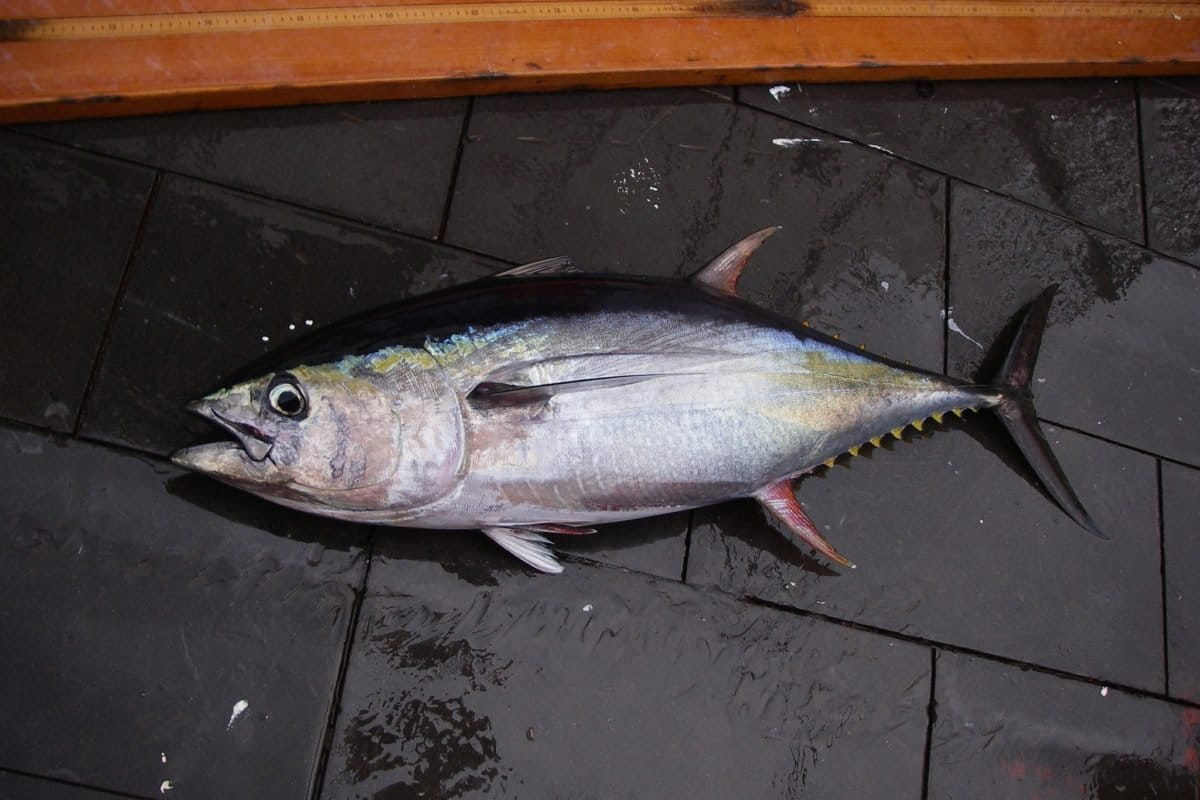
Yellowfin tuna catch laid out on leaves.

As one Indian Ocean tuna stock faces collapse, nations scramble to save others

Malavika Vyawahare 29 May 2023

Critics allege EU’s ‘toxic collusion’ with fishing lobbies is damaging Indian Ocean tuna

Malavika Vyawahare 7 Feb 2023

‘Watered-down’ plan to save Indian Ocean yellowfin tuna disappoints conservationists

Malavika Vyawahare 17 Jun 2021
Who controls Indian Ocean tuna? series

More specials

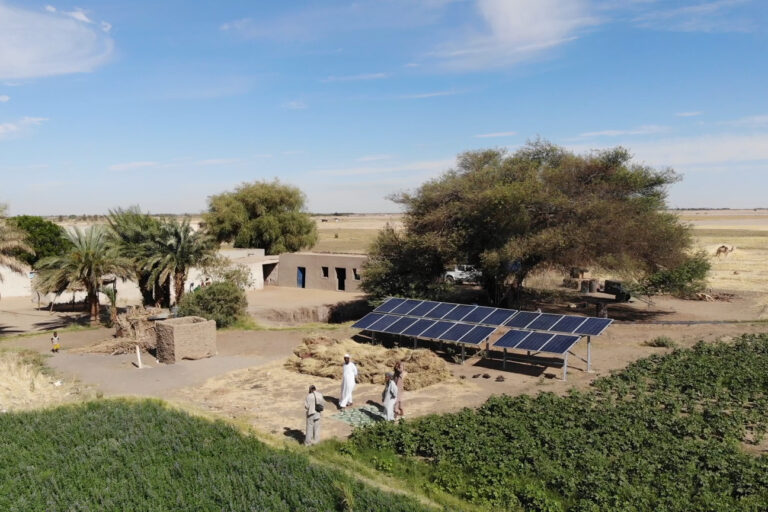
Solar panels in an arid part of Sudan.
9 stories

Negotiating Africa’s Energy Future

5 stories

The Great Insect Crisis

7 stories

Kafue River Transect

Free and open access to credible information

Learn more

Listen to Nature with thought-provoking podcasts

[DO NOT REUSE] Image by Ben Cherry. Courtesy of Netflix/Dian Fossey Gorilla Fund.

A new documentary film captures rare mountain gorilla behavior

Mike DiGirolamo 5 May 2026

Watch unique videos that cut through the noise

Collage, Jahëna Louisin, Mongabay reporter, and a Vodun ritual

Vodun's sacred role in saving West Africa’s mangroves

Rangers at Gashaka Gumti National Park, Nigeria

Defying conflict to track the world’s rarest chimpanzees

Leo Plunkett, Tom Richards, Sandy Watt 13 Apr 2026
Gold mine in the Dimonika Biosphere Reserve, the Republic of the Congo

What Republic of Congo’s gold rush is leaving behind

Berdy Pambou 17 Sep 2025
Woman farming seaweed at Pemba Island, Tanzania

Building a future from seaweed in coastal Tanzania

Lucia Torres 1 May 2025
Farmer in Mozambique. The price for Europe's packing paper boom

The price of Europe's paper packaging boom

Boaventura Monjane, Davide Mancini, Juan Maza 2 Apr 2025

We’re a nonprofit

Help us tell impactful stories of biodiversity loss, climate change, and more
Donate

In-depth feature stories reveal context and insight

African savanna elephants are endangered, after years of poaching for their ivory, decimated their numbers. Now, their habitats are fast-shrinking due to human activities.
Feature story

Trump called trophy hunting a “horror show,” but permitted 300-plus elephant trophy imports in 2025

Spoorthy Raman 18 May 2026
Installing an IFAW-supported temporary solar fence in Chikomeni chiefdom, within the Malawi-Zambia Transfrontier Conservation Area, to deter human-elephant conflict. Image courtesy of IFAW.
Feature story

Radio and satellite alerts help Zambian farmers live with dangerous wildlife

Ryan Truscott 15 May 2026
White-bellied pangolin (Phataginus tricuspis) in Ondo state, Nigeria. Adedotun Ajibade via iNaturalist (CC BY-NC 4.0)
Feature story

Nigeria aims for stronger wildlife protections with sweeping new law

Valentine Benjamin 12 May 2026
Fredrick Njoroge Kariuki, left, and Miron Onsarigo, the Hewa Safi innovators. Image courtesy of Lemmuel Agina/The Earth Foundation.
Feature story

Teen innovators in Kenya turn farm waste into award-winning vehicle exhaust filter

Malavika Vyawahare, Mary Mwendwa 12 May 2026

Quickly stay updated with our news shorts

Gelada monkeys huddle in the cold: Photo of the week

Shanna Hanbury 30 Jun 2026
A group of geladas monkeys (Theropithecus gelada), pictured above, huddle to keep warm on a cold day in the Wilhelma Zoo in Stuttgart, Germany. Endemic to Ethiopia’s cold Afroalpine and sub-Afroalpine grasslands, the species is the only primate, apart from humans, that primarily lives on land rather than trees. They spend most of their time grazing grass and have complex social systems focused around vocal communication, hugging, and grooming, especially between females. “On this day … the chill in the air made ideal conditions for a gelada group hug that included some mutual grooming,” Julie Larsen, Mongabay’s photo editor, said of the moment she captured in 2014. “As I looked down on their gathering, the monkey in the middle peered up at me, clearly benefitting from her fortunate position,” she added. “Then, the group closed over her, a single blanket of chocolate-colored shaggy fur against the elements.” According to Dario Fraschetti, a scientific assistant at Wilhelma Zoo, animals with short hair, as in the photograph, are likely females. Males have distinctive long manes and a bright red mark on their chests. Of the 30-40 gelada monkeys that live at the zoo, the vast majority are females, which is similar to their social structure in the wild. The zoo participates in a Europe-wide effort to keep a healthy captive-bred population of the species in partnership with EAZA Ex situ Programme (EEP). Hugging between females in the wild has been observed to increase between unrelated mothers during the first months of their offspring’s life, which researchers said may be to “improve female cohesiveness against males, thus reducing the risk of infanticide, which is particularly high in geladas.” The monkeys also display social behaviors that are rare among mammals such as consoling and protecting victims of conflict. And like humans, they also exhibit contagious yawning, which is thought to be linked to empathy. The species is listed as least concern by the IUCN, the global conservation authority. Though the organization notes that the conservation status is partially due to an absence of detailed data on their geographic range and demographic trends. Aerial population surveys in the 1970s estimated a population of approximately 440,000 geladas. But a recent synthesis looking at studies published between 2009 and 2024 put the current population estimate at just under 30,000; though, the authors noted that further studies are needed. Research has also found that gelada monkeys have an interesting relationship with Ethiopian wolves (Canis simensis). Reminiscent of the friendship between humans and dogs, a 2015 study found that the two species don’t display aggression toward each other. Wolves were observed spending more than an hour roaming among the monkeys in peace while looking for rodents. Moreover, the study found that the wolves had more rodent-hunting success while in the company of Gelada monkeys. Banner image: Gelada monkeys engage in a group hug in Wilhelma Zoo in Germany. Image © Julie Larsen.
Gelada monkeys engage in a group hug in Wilhelma Zoo in Germany. Image © Julie Larsen.

Kenya's overcrowded safaris: Wildlife for who?

Izzy Sasada 28 Jun 2026
Thinking of going on safari? You’re not alone.  The popularity of African safaris has led to a boom in safari companies, and scenes of overcrowded wildlife sightings and new tourism developments are becoming increasingly common in places like Kenya's Maasai Mara. Recently, a Kenyan court dismissed a legal challenge against The Ritz-Carlton, Masai Mara Safari Camp, allowing the controversial luxury development to continue operating, despite concerns from conservationists and Maasai leaders that it could disrupt an important wildebeest migration route. From the colonial origins of national parks to modern luxury tourism, conservation in Africa has often been shaped by outsiders’ visions of nature. In this episode of Conservation Entangled, host @izzysasada explores how these tensions are still playing out today.
Vans line up waiting for a kill in Maasai Mara, Kenya.

Hope for vultures in Nigeria as some belief-based users adopt plant alternatives

Sean Mowbray 24 Jun 2026
Using plants instead of vulture parts for belief-based practices is helping to tackle poaching of the birds in some regions of Nigeria, say conservationists. Vulture populations have collapsed in Nigeria. The country was once home to seven vulture species; recent surveys recorded only two, the critically endangered hooded vulture (Necrosyrtes monachus) and the palm-nut vulture (Gypohierax angolensis). Habitat loss, poisoning and poaching for belief-based uses, such as the use of vulture parts in traditional medicines or to bring luck or success, are the primary drivers of their rapid decline. In recent years conservation groups, including the Nigerian Conservation Foundation (NCF), have engaged with traditional medicine practitioners to reduce demand for vulture parts. Stella Egbe, species conservation manager at NCF, told Mongabay that many practitioners are switching to plant alternatives, likely because of awareness-raising, increased law enforcement and higher prices of vulture parts in some regions. Chief Samson Ola Soyoye, vice president of the National Association of Nigerian Traditional Medicine Practitioners, told Mongabay the use of vulture parts has a long history in medicinal practices in Nigeria. “That's when the vultures were many but now [they are] rapidly going into extinction,” he said. “My view is to look for alternative plants instead of vultures.” More than 20 plants are now used in place of vulture parts in some places, Egbe said, adding that the conservation status of the plant alternatives also needs to be assessed. To date, the African mahogany tree (Khaya ivorensis), also known as oganwo, is the only species used as an alternative by practitioners that is assessed by the IUCN Red List. It’s listed as vulnerable owing to large declines in numbers. Another species, the violet tree (Securidaca longipedunculata), known locally as ipeta, is also thought to be declining owing to overharvesting. Egbe said NCF plans to cultivate medicinal plant species that are at risk of being overharvested in protected areas. Soyoye said his organization has had success engaging with registered practitioners in southwest Nigeria to encourage the uptake of plant alternatives, but awareness needs raising to reach more. Enforcement at a national level to tackle vulture killings and the sale of their parts in markets is also required, he said. Regional differences in the uptake of plant alternatives follows patterns of traditional beliefs, said Michael Manja Williams, a PhD Candidate at the Joseph Sarwuan Tarka University. In south and east Nigeria, cultural norms generally prohibit the killing of vultures, aligning with conservation messages, so practitioners are often more willing to stop using their parts, he told Mongabay. In the north and west, beliefs link the presence or sight of vultures to bad luck or ill omens and demand for vulture parts appears to be growing there. Overall, Egbe said she is “cautiously optimistic” about the progress made, but added “We're still far away from celebrating the successful recovery of vulture populations.”. Banner image: A hooded vulture. Image by Mibby23 via Flickr (CC BY-NC 2.0).
A hooded vulture. Image by Mibby23 via Flickr (CC BY-NC 2.0).

Before tourists can see bonobos, trackers must earn their trust

Rhett Ayers Butler 23 Jun 2026

Founder's Briefs: An occasional series where Mongabay founder Rhett Ayers Butler shares analysis, perspectives and story summaries.

In Salonga National Park in the Democratic Republic of Congo, researchers and trackers are working to habituate a group of about 60 bonobos. The aim is to help the great apes accept a limited human presence, first for research, and later for carefully managed tourism. The process is slow. Trackers may leave camp around 3 a.m. to reach the previous night’s nesting site before the bonobos (Pan paniscus) wake. They then follow the group through the forest until the endangered apes build new nests in the evening. “The whole idea of habituation is that you meet the group every day in a very friendly, non-interactive way so they accept you as part of the forest,” Felix Bofeko, an assistant researcher in the program, told Mongabay’s David Akana. Habituation requires the same people, same restraint, and same routine, repeated long enough for the animals to stop treating human presence as a threat. When the work began, the bonobos fled at the sight of people. Now, Bofeko says, researchers can sometimes remain with them for two or three hours. Two visitors may be tolerated. Three or four may still be too many. The work has value even before tourism begins. Habituated animals can be observed more closely. Researchers can collect fecal and urine samples for genetic, pathogen, and diet analysis. Salonga is part of the Bonobo Diversity Project gathering standardized data across the DRC. Camera traps and acoustic monitoring are also being introduced, with the hope that real-time systems could eventually detect gunshots and help guide patrols. Health risks must be managed carefully. Great apes are vulnerable to human-borne diseases, including respiratory infections. Salonga’s staff follow screening and hygiene protocols, wear masks near bonobos, and keep a minimum distance from the animals. The closer conservation gets to wildlife, the more it depends on discipline. The project also shows how much field conservation depends on local relationships. Salonga’s managers have hired locals, including former hunters whose knowledge of the forest makes them strong trackers. More than 10 local people now have jobs linked to the project. Park staff have also installed internet hubs and complaints channels in nearby communities, giving residents a more regular way to communicate with management. That work matters because many people around Salonga have long associated the park with restrictions, enforcement, and arrests for poaching. Bonobo tourism remains a future prospect. The more immediate change is that some residents are being paid for knowledge that once supported hunting and is now being used for protection. For funders and conservation planners, Salonga offers a useful lesson. The visible result may one day be a visitor watching bonobos in the forest. The work behind it is less visible: patient tracking, health protocols, local hiring, basic infrastructure, and enough continuity for both people and animals to adjust. Read the full story by David Akana here. Banner image: A bonobo in Salonga National Park. Image courtesy of Alice Péretié/Chengeta Wildlife.
A bonobo observes its surroundings from the canopy in Salonga National Park. Earning the trust of wild bonobos is a painstaking process that begins before dawn and can take years to achieve. Photo by Alice Péretié / Chengeta Wildlife.

A few seconds with one of West Africa’s rarest birds

Rhett Ayers Butler 22 Jun 2026

Founder's Briefs: An occasional series where Mongabay founder Rhett Ayers Butler shares analysis, perspectives and story summaries.

The white-necked picathartes is easy to miss. In Taï National Park, in southwestern Côte d’Ivoire, it nests beneath rocky overhangs, shaping mud cups against stone walls deep inside the forest. It may appear for only a few seconds, long enough to show its bare yellow head, black cheek patches, and long-legged frame, before it vanishes again into the trees. The bird’s elusiveness reflects the kind of habitat it needs, reports contributor Ryan Truscott for Mongabay. Taï is the largest intact remnant of the Upper Guinean rainforest, a forest type that once stretched across much of West Africa. Its boulders, old animal trails, giant mahoganies, duikers, hornbills, monkeys, and river hogs are part of a system that still retains much of its original complexity. The white-necked picathartes (Picathartes gymnocephalus) depends on rocky nesting sites and surrounding forest cover. Other species help maintain the forest itself. Hornbills, primates, and mammals move seeds through the canopy and across the forest floor, helping trees and lianas regenerate far from their parent plants. That makes Taï important beyond the survival of any single rare species. Protected areas are often judged by their boundaries, patrol numbers, and better-known animals. A fuller measure is whether ecological relationships continue: animals using long-established routes, seed dispersers moving between fruiting trees, birds returning to nesting walls, and rangers knowing enough of the forest to find those places again. Keeping those relationships intact depends on ordinary field capacity. Rangers need training, equipment, safe access, and time in the forest. Local organizations need support to monitor species whose decline may be easy to miss until it is advanced. Conservation groups need to treat field signs, ranger knowledge, and repeated observations as evidence. Asked what the white-necked picathartes means to Ivorians, ranger Gliman Hyacinthe gave Truscott a simple answer: “It’s rare. It’s beautiful.” In Taï, the bird also points to a forest where the conditions for rare species are still present. Read Ryan Truscott’s story here. Banner image: A white-necked picathartes (Picathartes gymnocephalus). These curious-looking birds frequent boulder-strewn parts of the rainforest, building their nests on stone walls of overhangs and caves. Image by Charles J. Sharp via Wikimedia Commons (CC BY-NC 4.0).
The remnants of Upper Guinean Tropical Rainforest within Sierra Leone are home to a multitude of species, many of them threatened, such as the white-necked rockfowl (Picathartes gymnocephalus). Image by Charles J. Sharp via Wikimedia Commons (CC BY-SA 4.0).

Demand for vultures in West Africa threatens Central African populations

Sean Mowbray 19 Jun 2026
Conservationists warn that vulture populations in central African countries like Chad are increasingly at risk due to belief-based use in Nigeria and Benin. Abiola Sylvestre Chaffra, a research fellow at the International Bird Conservation Partnership, told Mongabay he was out in Chad, photographing vultures, when a man offered to help him capture the birds. Vultures love donkey meat, the man said. All Chaffra had to do was buy a donkey and leave its poisoned carcass in the open. The man told Chaffra he had helped many people catch vultures this way. In West African countries like Nigeria and Benin, vultures are poached both alive and dead for beliefs that they bring luck, success or protection against witchcraft. Vulture parts, including head and feet, eggs and nests, are also used. This demand is now reaching vulture populations in Central Africa. [caption id="attachment_321506" align="alignnone" width="750"]A juvenile hooded vulture for sale at a market in Benin. Image by Abiola Sylvestre Chaffra. A juvenile hooded vulture for sale at a market in Benin. Image courtesy of Abiola Sylvestre Chaffra.[/caption] In a recent paper, researchers detailed how critically endangered hooded vultures (Necrosyrtes monachus) were absent around most slaughterhouses and landfill sites they visited near N’Djamena, Chad’s capital. “That doesn't really make sense, because there's a ton of food,” said study co-author Nico Arcilla, president of the International Bird Conservation Partnership. Nearly half the local residents interviewed by the researchers said they knew of recent poisoning incidents in the area, and more than one-third stated they were aware of poachers from countries such as Nigeria, Niger, Benin and Cameroon trapping or killing vultures. “The driver appears to be coming from West Africa, and it generally seems to point back to Benin or Nigeria,” Arcilla said. Belief-based use practices appear to be largely absent in Chad, she added. In another study, led by Chaffra, surveys in Benin’s traditional markets found that while most vultures on sale originated from other West African countries, such as Ghana, Burkina Faso, Nigeria and Niger, there were also birds from Cameroon and Gabon. Another 2025 market survey in Benin found a small number of birds sourced from Cameroon. A 2014 paper revealed that vulture parts on sale in Nigeria were sourced from as far as Sudan. “In several cases, trade appears to cross national borders, highlighting the need for regional cooperation to better understand and combat these networks,” Chaffra said. Darcy Ogada, program director at The Peregrine Fund who wasn’t involved in the research, said it isn’t surprising the supply chain is very far-reaching since vultures in West Africa have become scarce. “That should raise the alarm,” Ogada added. “It's going to keep moving to where populations are relatively much better.” Arcilla said that awareness-raising in communities, law enforcement, and conservation efforts are urgently needed, targeting both natural and urban areas where vultures persist. “It is also necessary to continue research into supply chains and to promote sustainable alternatives in order to reduce demand for vultures and their parts,” Chaffra said. Banner image: A pair of hooded vultures. Image by Nico Arcilla.
: A pair of hooded vultures. Image by Nico Arcilla.

Share Short Read Full Article

Share this short

If you liked this story, share it with other people.

Facebook Linkedin Threads Whatsapp Reddit Email

Subscribe

Stay informed with news and inspiration from nature’s frontline.
Newsletter

News formats

  • Videos
  • Podcasts
  • Articles
  • Specials
  • Shorts
  • Features
  • The Latest

About

  • About
  • Contact
  • Donate
  • Impacts
  • Newsletters
  • Submissions
  • Terms of Use

External links

  • Wild Madagascar
  • For Kids
  • Mongabay.org
  • Reforestation App
  • Planetary Health Check
  • Conservation Effectiveness
  • Mongabay Data Studio

Social media

  • LinkedIn
  • Instagram
  • Youtube
  • X
  • Facebook
  • Tiktok
  • Reddit
  • BlueSky
  • Mastodon
  • Android App
  • Apple News
  • RSS / XML

© 2026 Copyright Conservation news. Mongabay is a U.S.-based non-profit conservation and environmental science news platform. Our EIN or tax ID is 45-3714703.